CHITRAL: The climate change phenomenon has hit the cattle farming in Chitral over the past two decades as flooding caused by torrential rains and glacial lake outburst floods have turned the pastures into wastelands.
Hamid Ahmed, a Chitral-based ecologist, told Dawn that livestock keeping was once a major source of local economy, engaging both men and women as workforce, while pastures were the main feeding grounds during the six months of late spring, summer and early autumn in each village.
He said that most of pastures had been denuded of vegetation either fully or partially as floods have become frequent during the past two decades throughout Chitral valley.
He said the recuperation of a flood-hit pasture took five to eight years during which the villagers found it too difficult to feed their animals, which forced the pastoral men either to give up tending livestock or reduce the strength drastically.
Mr Ahmed said that the frequent floods in the valley had hit the rural economy accrued from cattle farming, intensifying poverty in the mountainous villages.
He said fodder for stall feeding during the long winter season was also collected from pastures and stored on the roofs of corrals in the villages, but the loss of pastures meant loss of food for cattle.
He also pointed out the increasing population of non-palatable or undesirable species of fodder in the pastures caused by the climate change. He added shrubs and fodder plants specific to lower altitudes now grew and survived in the high-altitude pastures as well.
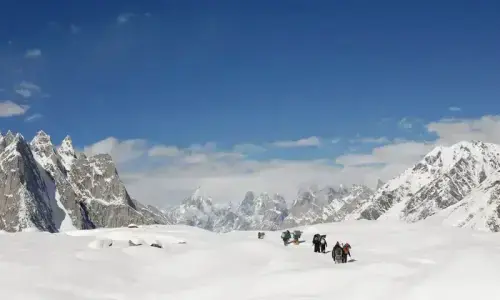
The valleys of Sheshi Koh, Arsoon, Damil, Rumbur, Birir, Arkari, Gobor and Golen in Lower Chitral and Yarkhoon, Khot, Rech, Oveer, Mulkhow and Terich valleys in Upper Chitral are the areas, which have lost most of their pastures to the floods.
Naeem Khan, who works with a livelihood project of an NGO, said that he knew about a number of households in different parts of Chitral having given up on cattle farming, which used to be the main source of their sustenance in the past and employment generator for a good number of uneducated youth.
Published in Dawn, September 22nd, 2024