20 clinics on wheels set up as dengue cases increase in Rawalpindi


 0
0


RAWALPINDI: As the number of dengue patients started increasing, the district administration expedited its campaign to eliminate the dengue mosquitoes and larvae besides setting up clinics on wheels in the most-affected areas.
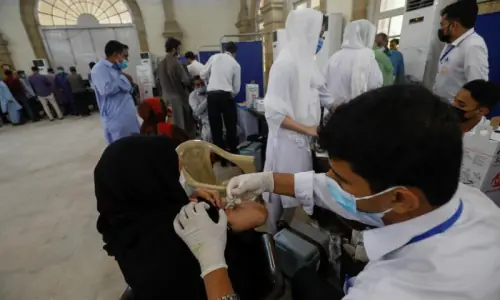
The establishment of the clinics on wheels is aimed to check patients in remote areas on time and refer them to the nearest hospital.
Talking to Dawn, Deputy Commissioner Dr Hassan Waqar Cheema said Chief Minister Maryam Nawaz had directed for ensuring dengue test facilities in different areas so patients could be provided timely treatment.
“Rapid tests will be conducted through the clinics on wheels in far-flung areas. Two clinics on wheels each have been placed in the Union Councils of Chak Jalaldin and Kotha Kalan while one extra clinic is arranged in the evening at Chak Jalaldin,” he said.
Initiative aimed to ensure provision of treatment to patients on time, says DC
A total of 20 such clinics have been established so far.
A doctor, a nurse and other staff along with equipment are deputed in the clinics on wheels for checking patients and getting the rapid dengue tests conducted. In case of a positive result, the patient will be sent to the nearest government hospital for timely treatment. Blood CP analyzers have been provided at the clinics on wheels.
“Though the number of patients increased last month, it is still less compared to the corresponding period of last year. Total 136 cases have been reported in the current season against 312 in last year,” he said.
He said to implement the standard operating procedures issued by the Punjab government the district administration had imposed Rs10.6 million fines on violators, sealed 673 buildings and registered 2413 cases besides issuing 1927 challans so far.
Moreover, 300 beds have been allocated for dengue patients in hospitals and the bed capacity would be increased to 1000 if a need arises. The DC said training of 1100 doctors from the public sector tertiary, secondary and primary care hospitals had been completed while 1200 doctors from private hospitals and general practitioners were also trained.
Mr Cheema said parliamentarians from Rawalpindi district had been engaged to monitor anti-dengue campaigns in their respective constituencies. A field control room has been established with required logistics and insecticides while Rawalpindi Waste Management Company (RWMC) has been directed to focus on union councils where dengue cases have been reported.
For the third-party validation (TPV) of the anti-dengue campaign, Civil Defence has been deputed exclusively for case responses and the agriculture department tasked with technical TPV of the case responses.
“As many as 35 officials are tasked with monitoring high risk UCs and red UCs’ anti-dengue activities and to supervise case response under SOPs. Anti-dengue medicines will sprayed in the area after detection of a dengue case so it will not spread.
Meanwhile, Special Secretary Health Punjab Mohammad Iqbal reviewed the anti-dengue campaign in a meeting along with the deputy commissioner.
He said work timely action should be taken on case response and spray should be carried out in the affected areas. He said that the initiative of deputing officials and personnel of relevant institutions to monitor dengue surveillance teams in high-risk union councils was commendable.
Meanwhile, health authority officials said a total of nine dengue patients reported to hospitals on Friday, adding 40 patients were admitted to hospitals and 33 of them were confirmed dengue patients.
There are two patients in CDA Hospital, one each in Al Razi Hospital, Fauji Foundation and Pims, 10 in Holy Family Hospital and nine each in District Headquarters and BBH. Most of the patients arrived from Satellite Town, Khyaban-i-Sir Syed, Gulistan Colony, Peshawar Road, Dhoke Chaudhrian, Chaklala Scheme-III, Shakrial, Girja, Chak Jalaldin and adjoining areas.
Published in Dawn, September 7th, 2024