S. Korea fights new border threat: malarial mosquitoes


 0
0
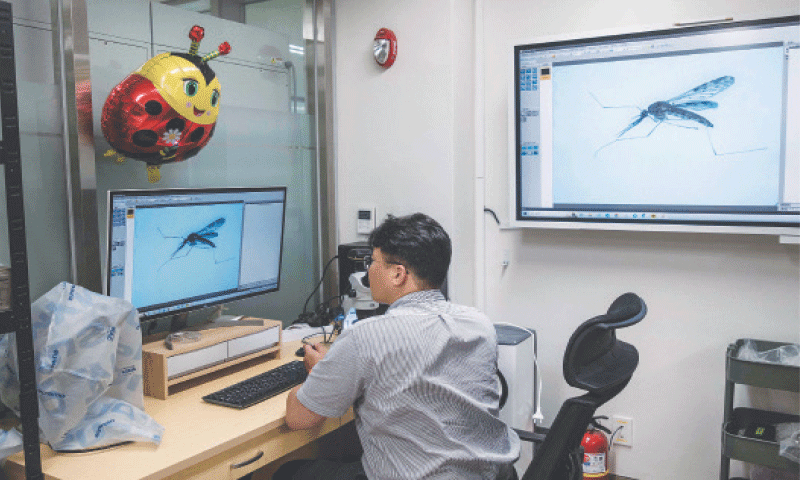

PAJU: Near the heavily fortified border that divides North and South Korea, a monitoring device is working 24-7 — not tracking missiles or troop movements, but catching malaria-carrying mosquitoes that may cross the border.
Despite its advanced healthcare service and decades of determined efforts, achieving “malaria-free” status has remained elusive for South Korea, largely thanks to its proximity to the isolated North, where the disease is prevalent.
The DMZ has stagnant water plus “plenty of wild animals that serve as blood sources for mosquitoes to feed on in order to lay their eggs”, said Kim Hyun-woo, a staff scientist at Seoul’s Korea Disease Control and Prevention Agency.
The South issued a nationwide malaria warning this year, and scientists say climate change, especially warmer springs and heavier rainfall, could bring more mosquito-borne diseases to the peninsula unless the two Koreas, which remain technically at war, cooperate.
The core issue is the DMZ, a four-kilometre-wide no man’s land that runs the full length of the 250-kilometre border. The demilitarised zone is covered in lush forest and wetlands, and largely unvisited by humans since it was created after the 1953 ceasefire that ended Korean War hostilities.
South Korea once believed it had eradicated malaria, but in 1993 a soldier serving on the DMZ was discovered to have been infected, and the disease has persisted ever since, with cases up nearly 80 per cent last year to 747, from 420 in 2022.
Published in Dawn, August 28th, 2024