Pakistan offers Bangladesh assistance to cope with floods



ISLAMABAD: Prime Minister Shehbaz Sharif on Friday reached out to the interim government of Bangladesh, extending an offer of aid to address the catastrophic impacts of recent flooding.
The letter addressed to Chief Adviser Muhammad Yunus, marks the first official engagement with Dhaka’s new leadership.
Pakistan government had earlier through a statement on Aug 7 expressed solidarity with the people of Bangladesh after the fall of Hasina Wajid’s government amid widespread protests.
In his letter, PM Shehbaz expressed “profound sympathies and concern” over the extensive damage and loss of life caused by the floods, pledging solidarity and support from Pakistan.
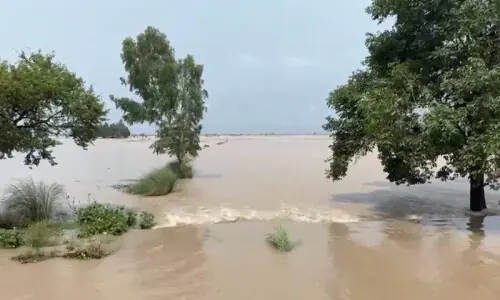
Recent floods in Bangladesh have unleashed severe devastation, claiming at least 15 lives and impacting about 4.5 million in the country’s northeast.
Death toll rises to 15, with millions displaced; Dhaka, Chittagong, Cox’s Bazar and Comilla worst hit
“We stand in solidarity with Bangladesh,” PM Shehbaz wrote, emphasising the shared resolve to assist those affected. He lauded the resilience of the Bangladeshi people and expressed confidence in their ability to recover under Muhammad Yunus’ leadership.
Bangladesh’s interim government, already grappling with a trio of daunting tasks — reforming a discredited law enforcement, reviving a moribund economy, and shoring up a teetering banking sector — now faces the added strain of severe floods, which have stretched resources thin.
This has complicated disaster response efforts, and heightened the need for swift economic recovery and political reform.
Relations between Pakistan and Bangladesh largely remained strained during Hasina Wajid’s tenure, marked by historical grievances stemming from the 1971 war. Additionally, the punishments meted out to figures associated with that period by her government has been a continuous source of tension.
The change in Dhaka is being seen as an opportunity for Pakistan to reengage with the important South Asian country.
Bangladesh floods
Flash floods wrought havoc in Bangladesh on Friday as the country recovers from weeks of political upheaval, with the death toll rising to 15 and millions more caught in the deluge.
The South Asian nation of 170 million people, crisscrossed by hundreds of rivers, has seen frequent floods in recent decades.
Monsoon rains cause widespread destruction every year, but climate change is shifting weather patterns and increasing the number of extreme weather events.
“It’s a catastrophic situation here,” rescue volunteer Zahed Hossain Bhuiya, 35, told AFP from the worst-hit city of Feni. “We are trying to rescue as many people as we can.”
Nur Islam, a shopkeeper in Feni, said his home had been completely submerged.
“Everything is underwater,” the 60-year-old said.
Much of Bangladesh is made up of deltas where Himalayan rivers, the Ganges and the Brahmaputra, wind towards the sea after coursing through India.
All major tributaries of the two transnational rivers were overflowing, according to local media reports.
In India’s hard-hit Tripura state, more than 23 people have died in the floods since Monday.
Bangladesh’s disaster management ministry said in a bulletin that its latest toll of 15 deaths included fatalities in cities along the country’s southeastern coast.
That included the main port city of Chittagong and Cox’s Bazar, the latter a district home to around a million Rohingya refugees from neighbouring Myanmar.
Areas east of the capital Dhaka were also badly hit including the city of Comilla, near the border with Tripura state in India.
Nearly 190,000 others were taken to emergency relief shelters, according to the bulletin, while altogether 4.5 million people had been affected in some way.
The floods come less than three weeks after the ouster of ex-premier Sheikh Hasina, who was forced to flee by helicopter to India, her government’s biggest political patron, during a student-led uprising.
Asif Mahmud, a leader of the student protests, and who is now in Muhammad Yunus’ caretaker cabinet, on Wednesday accused India of “creating a flood” by deliberately releasing water from dams.
India’s foreign ministry rejected the charge, saying its own catchment area had experienced the “heaviest rains of this year” this week, and that the flow of water downstream was due to “automatic releases”.
Hundreds of people nonetheless gathered at Dhaka University on Friday to protest India’s “water aggression”, featuring a banner showing Indian Prime Minister Narendra Modi delighting at the sight of drowning people.
“Water that has come from India has washed away all our euphoria,” activist and poet Saikat Amin told AFP on the sidelines.
With input from AFP
Published in Dawn, August 24th, 2024