Council of Islamic Ideology seeks review of SC verdict in Mubarak Sani case


 0
0


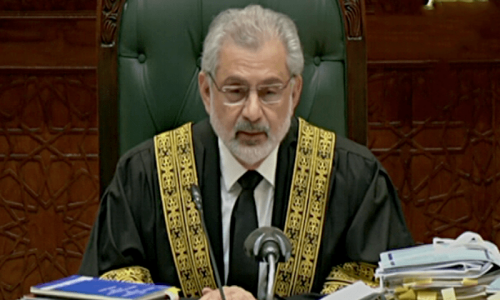
ISLAMABAD: The Council of Islamic Ideology (CII) has expressed reservations over a number of reasons given by the Supreme Court in its July 24 verdict in the Mubarak Ahmad Sani case and urged the judges to review their ruling.
“The whole nation is perturbed over it [the SC ruling]. This is a matter of faith and love for the Holy Prophet (Peace Be Upon Him) instead of legal technicalities,” said the CII in a statement issued after its meeting on Thursday.
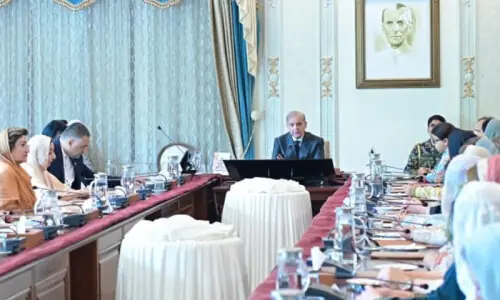
The meeting, held to discuss the SC ruling, was presided over by CII Chairman Dr Muhammad Raghib Hussain Naeemi.
The statement said CII would soon send its detailed report on the matter to the SC, adding that there were many parts of the decision which are considered inappropriate by religious scholars and the CII in light of the Islamic injunctions.
The CII members expressed hope that the SC “will soon review its decision” and urged the government, particularly Prime Minister Shehbaz Sharif, to play an effective role in the matter.
On February 6, an SC bench, led by Chief Justice of Pakistan Qazi Faez Isa, overturned the conviction of Mubarak Sani, who was accused of an offence in 2019 under the Punjab Holy Quran (Printing and Recording) (Amendment) Act.
In its judgement, the court noted that the offence which the defendant has been accused of was not criminalised till 2021. Consequently, the apex court set aside the conviction and ordered the immediate release of the petitioner.
This led to what the government and the legal community termed a “malicious and slanderous campaign” against the chief justice, even prompting the Supreme Court to issue a clarification.
The decision was subsequently challenged by the Punjab government on the grounds that paragraph 9 of the order, regarding Article 20 of the Constitution, needed to be modified as the rights of the citizens as envisaged under the provision were not absolute and instead subject to law, public order and morality.
While accepting the pleas, the Supreme Court on July 24 reportedly declared that the right to profess religion and religious freedom, as ensured by the Constitution, was subject to law, morality and public order.
Published in Dawn, August 9th, 2024