Troubled Bangladesh’s economy bogged down by high unemployment, inflation



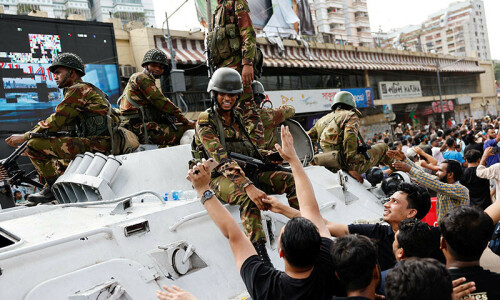
The student protests that forced Bangladesh Prime Minister Sheikh Hasina to quit and flee the country were also fuelled by tough economic conditions in what was once the world’s fastest-growing economy.
Here are some facts about Bangladesh’s economic challenges:
Under Hasina, Bangladesh has in recent years seen a sharp widening of its current account deficit, depreciation of the taka currency, and a decline in its foreign exchange reserves.
Readymade garments are a mainstay of Bangladesh’s economy, which is the third-largest exporter of clothing in the world.
Low wages have helped the country build the industry, but soaring living costs have sparked protests by garment workers calling for higher salaries.
The economy has slowed sharply since the Russia-Ukraine war pushed up prices of fuel and food imports, forcing Bangladesh to turn last year to the International Monetary Fund (IMF) for a $4.7 billion bailout.
In July, protests against job quotas in public sector jobs intensified amid stagnant job growth in the private sector as nearly 32 million young people are out of work or education in a population of 170 million.
Key facts
The central bank held rates at 8.5 per cent in July, after raising them twice earlier this year.
Inflation stood at 9.72pc in June and the central bank aims to bring it to 6.5pc by fiscal 2025.
The country’s GDP rose to 6.1pc in the Jan-March quarter, according to data released in July.
IMF concluded a second review in June, giving the country immediate access to about $928 million in loans for economic support and about $220 million to combat climate change.
In the report, the IMF said it expects economic growth to be at 5.4pc in the fiscal year 2024, higher than 4.8pc recorded in the first half.