A modest set of aspirations has long characterised the Pakistani urban white-collar class. The middle-class nirvana is owning a reliable car, a comfortable home in a decent suburb, quality education for their children and enough discretionary income for domestic help, dining out, nice outfits, home improvements, or the occasional trip up north. Many hope to save enough to perform Hajj and to give their children a memorable wedding.
The pursuit of this dream is framed in the enduring ethos of “Parho gay, likho gay, bano gay nawab”. However, this once-attainable stability is increasingly out of grasp. This class, once the bedrock of societal progress and upward mobility, is finding it increasingly difficult to make ends meet, acquire assets, and retire with dignity.
While it’s hard to consistently define what middle-class really means, several benchmarks exist, in the context of developing countries. Sandwiched between the rich on the one hand and the poor on the other, they’re usually the people in the third and fourth quintile of a population.
The World Bank’s gross national income-based definition estimates a monthly income of $300-$1,140 for them, while Credit Suisse’s wealth report considers adults with at least $15,000 in wealth to be middle-class. Going by the Federal Board of Revenue (FBR)’s income tax exemption limit, a salary of merely Rs50,000 per month is the unofficial boundary for being middle-class, and a significant portion of Pakistanis belong to this group.
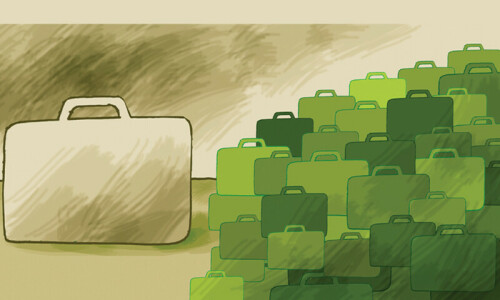
With no resources left for them in budgets amidst outrageous taxes, middle class households are just one mishap away from financial ruin
The middle class has been quietly struggling for years, shouldering the burden of tax breaks, subsidies and concessions, preferential land, capital, and infrastructure access for the protected classes — whether rich or poor — while they have been left to fend for themselves.
Rising inflation, stagnant wages, and extractive taxes are eroding their purchasing power and savings. There are no resources left for them in budgets and plans and no social safety net in the event of death, disability, illness, or unemployment; making these households one mishap away from financial ruin.
The state’s neglect has shifted even basic entitlements such as education, healthcare, affordable energy, safety & security into personal burdens, compelling individuals to assume responsibility for their own well-being and that of their family and community.
The contempt of those in power towards the third and fourth quintiles is staggering and undisguised. It makes a certain French queen look benevolent by comparison. The latest budget is a clear indication of their priorities, perpetuating a systemic cycle of exploitation while the privileged remain insulated and indulged.
Where direct taxes are concerned, the FBR seems to have its fingers in one pot: the salaried individuals. Skilled professionals and domain experts who have spent decades reaching a level of professional attainment will now effectively work for free for four months in a year, with the effective tax rate being 33pc, if their income happens to cross Rs1 million a month.
Unlike companies, which can deduct expenses and reduces their tax liability; these individuals pay taxes on their gross income making their tax burden far higher.
The more dependants they have, the faster their earnings dissipate, leaving these “high-income earners” remarkably vulnerable when ageing parents, struggling siblings and children are added to the equation. This doesn’t end here, as they are also hit with a barrage of federal and provincial taxes on every purchase, every service, every indulgence, chipping away all day every day until nothing is left to put towards their future.
Amidst an otherwise mind-numbing display of incompetence, successive governments have achieved a rare feat — a shared legacy of destruction. With striking synchroneity and coherence, they have created a perverse incentive structure that discourages hard work, productivity and excellence.
The consequences are plain to see. Capital is being reallocated to sectors with favourable tax treatment, leading to the deindustrialisation of the economy, the phasing out of tax-compliant businesses, dismal growth prospects, and a relentless assault on the middle class.
The situation is eerily reminiscent of ancient galley ships, where files of slaves crammed on benches in the lower deck, unheard and unseen, rowed ceaselessly, while another cohort continued with the merry-making on the upper deck.
The average Pakistani working in the documented sector is similarly trapped in an escalating cycle of taxation and forced to bear the burden of the entire economy on their shoulders, while freebies continue for landowners, bureaucrats, servicemen and politicians, funded with the very taxes extorted from the productive masses.
The cloth of upward social mobility is tearing apart, leaving the most productive members of society exposed to disenfranchisement. Financial suffocation and lack of representation in economic decisions are forcing the best and the brightest to consider a painful exit: abandoning their homeland for more sympathetic shores, where they are valued and respected.
The middle class, ultimately, lies battered and bruised as a casualty of a system that prioritises privilege over productivity and greed overgrowth.
The writer is a finance and strategy consultant and an academic
Published in Dawn, The Business and Finance Weekly, July 8th, 2024