ISLAMABAD: The Islamabad High Court (IHC) has finally allowed cellular companies to share with police data related to suspects for investigation in the post-crime scenario, as scores of inquiries remained halted due to a previous order, restraining telecom operators from facilitating law enforcement agencies with surveillance.
The order was issued on the petitions of Mian Najamus Saqib, son of former chief justice Saqib Nisar, and Imran Khan’s spouse Bushra Bibi in the audio leaks case.
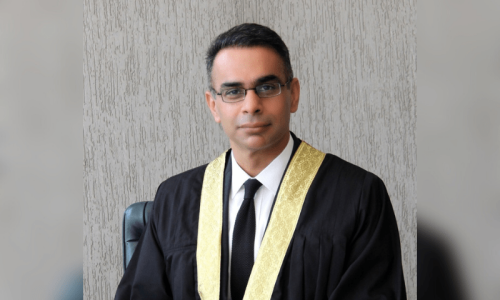
On May 29, Justice Babar Sattar issued the restraining order, with the result that the telecom operators stopped cooperating with police investigators.
At the last hearing, Islamabad Police Law Director Tahir Kazim and the counsel for telecom licensees submitted that licensees had suspended the sharing of Call Detail Record (CDR), live locations of accused persons and consumers telecom data with law enforcement agencies, in compliance with the SOPs issued by the interior division.
“As the question of legality of any instructions and SOPs issued by the interior division and/or PTA to telecom licensees with regard to the provision of consumers telecom data to police authorities and investigation agencies is yet to be determined, the telecom licensees will continue to share such data in accordance with the SOPs issued by the interior ministry till the next date of hearing,” ruled Justice Sattar.
Earlier, Mr Kazim apprised the court that following a blanket order issued to the cellular companies against the surveillance, they had stopped sharing the much-needed data for investigation of routine crimes. Despite the clear difference between spying and post-crime investigation, the cellular companies had been treating both the scenarios at a par, he argued.
The order virtually handicapped the intelligence and law enforcement agencies in probing crimes and terrorist monitoring as the court stopped cellular companies from sharing citizens data with agencies.
Justice Sattar, in the order of May 29, stated: “It appears from the reports filed by the federal government, PTA and intelligence agencies and arguments of the learned counsel that no authorisation has been granted by the federal government under Section 5 of the Telegraph Act and/or Section 54 of the Telecommunication Act to authorise any individual, entity or agency to intercept calls, messages and to surveil citizens of Pakistan.”
As per the court order, the Fair Trial Act provides for grant of requests for surveillance by a judge of the high court. No phone tapping or other surveillance can be carried out, except pursuant to a warrant issued for such purpose by a high court judge, it mentioned. “Any such unauthorised surveillance would also be in breach of fundamental rights of citizens guaranteed by Articles 9, 10A, 14 and 19 of the Constitution, read with Article 4, and would cause irreparable harm to the liberty, dignity and privacy of the citizens being surveilled,” Justice Sattar ruled.
The court issued the direction: “Till the next date of hearing the intelligence agencies, including, inter alia, the ISI and IB, and police authorities will not surveil any citizens, except in accordance with requirements of the Fair Trial Act and warrants duly issued by a Judge of the High Court, and neither PTA nor the telecom companies shall authorize the use of their services or equipment for purposes of any surveillance or interception of phone calls or data.”
Published in Dawn, July 2nd, 2024