President Asif Ali Zardari on Sunday gave assent to the government’s tax-heavy Finance Bill 2024 for the new fiscal year.
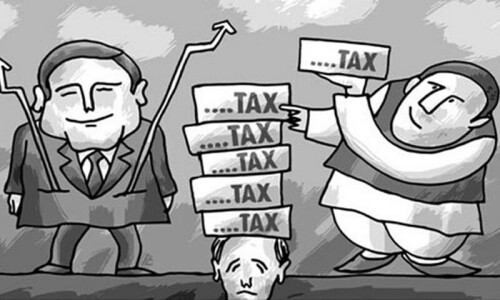
The government had presented the budget two weeks ago, drawing sharp criticism from opposition parties, especially the PTI, as well as coalition ally PPP.
Finance Minister Muhammad Aurangzeb had moved the finance bill in parliament, which had been opened to seek amendments and debate by the ruling alliance led by Prime Minister Shehbaz Sharif and its opposition.
Opposition parties, mainly parliamentarians backed by currently incarcerated former premier Imran Khan, had rejected the budget, saying it would be highly inflationary.
Earlier this week, the PPP — which had initially boycotted the debate over the budget — decided that it would vote for the finance bill despite certain reservations.
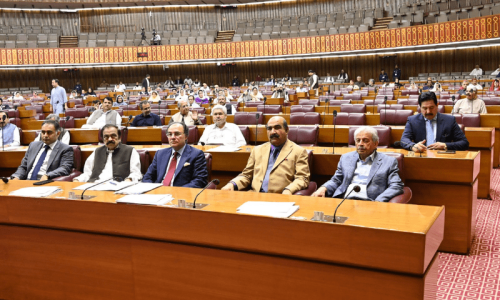
On Friday, the National Assembly passed the budget with some amendments. The motion was preceded by fiery speeches from the opposition, who described the budget as unrealistic, anti-people, anti-industry, and anti-agriculture.
Today, President Zardari gave assent to the bill in accordance with Article 75 of the Constitution, the media wing of the President House said, adding that the bill would be applicable from July 1 (tomorrow).
Under Article 75 (1), the president has no power to reject or object to the finance bill, which is considered to be a money bill as per the Constitution.
The article reads “When a Bill is presented to the President for assent, the President shall, within [ten] days,–(a) assent to the Bill; or (b) in the case of a Bill other than a Money Bill, return the Bill to the Majlis-e-Shoora (Parliament) with a message requesting that the Bill or any specified provision thereof, be reconsidered and that any amendment specified in the message be considered”.
Amendments amid criticism
The government had on Friday extended exemptions in specific sectors while announcing new tax measures in several areas to generate additional revenue in the coming fiscal year to meet the International Monetary Fund’s criteria.
During the NA session, opposition lawmakers, particularly from the PTI, criticised the budget, asserting that it was now an open secret that the document was dictated by the International Monetary Fund (IMF). Leader of the Opposition Omar Ayub Khan had denounced the budget as “economic terrorism against the people”.
Pakistan is in talks with the IMF for a loan of $6 billion to $8bn.
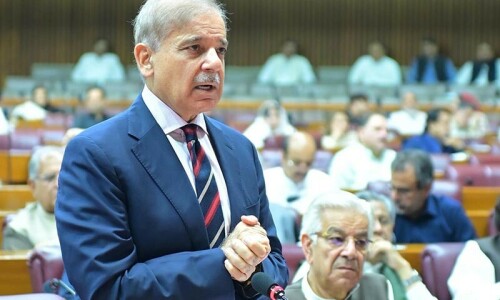
Earlier this week, PM Shehbaz had confirmed that the budget was prepared in collaboration with the IMF.
Amendments include introducing a capital value tax on property in Islamabad, implementing new tax measures on builders and developers and increasing the Petroleum Development Levy (PDL) on diesel and petrol by Rs10 instead of the proposed Rs20.
The House approved 53 supplementary demands for grants pertaining to various ministries and divisions for 2022-23 and 25 demands for the fiscal year 2023-24. Additionally, 26 demands were approved to cover the excess expenditure of various ministries and divisions for 2022-23.
Through an amendment to the Finance Bill 2024, the NA had also approved an amendment regarding an increase in the perks and privileges of lawmakers, with a majority vote.
According to the amendment, the travel allowance of MNAs has been increased from Rs10/km to Rs25/km. It has been declared that unutilised air tickets of members will not be cancelled and would remain valid for another year.
The government has projected a sharp drop in its fiscal deficit for the new financial year to 5.9pc of GDP, from an upwardly revised estimate of 7.4pc for the current year.
The central bank has also warned of possible inflationary effects from the budget, saying limited progress in structural reforms to broaden the tax base meant increased revenue must come from hiking taxes.
The upcoming year’s growth target has been set at 3.6pc with inflation projected at 12pc.