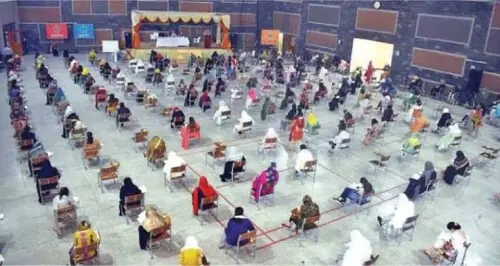
KARACHI: Pakistan has the world’s second highest number of out-of-school children whose numbers have grown dramatically since 2021. Deprived of life’s basic necessities, these children are more vulnerable to stress, trauma, and social isolation, leading to anxiety, depression and other mental health issues, shared an expert on the second day of a conference held on Friday.
The conference titled ‘Healthy Futures: Preventing Non-Communicable Diseases (NCDs) in Young Hearts and Minds’ is organised by the Aga Khan University’s Department of Community Health Sciences in collaboration with the World Health Organisation (WHO) and United Nations Children’s Emergency Fund (Unicef).
It aims at exploring adolescent health issues, highlighting under-discussed topics such as screen time, obesity, substance use and abuse, mental health problems, sedentary lifestyles, educational curricula and lifestyle innovations.
Giving a presentation on addressing social and mental health issues in out-of-school children, Prof Nusrat Husain, professor of psychiatry and research director of the Global Mental Health, University of Manchester, said that currently about 23 million children were out-of-school in Pakistan, representing about half of the school-age population.
“These children often come from marginalised backgrounds and face significant barriers such as poverty, gender discrimination, geographic isolation, and cultural restrictions. Being out of school increases their risk of child labor, early marriage, and exploitation, affecting their future opportunities and overall well-being,” she said, adding that mental health of those children in Pakistan was a growing concern.
“The absence of a supportive environment, combined with societal stigma surrounding mental health, contributes to a sense of despair. These children may struggle to find purpose, increasing their risk of self-harm behavior, the strongest predictor of death by suicide.”
Prof Husain also briefed the audience about the results of a psychological therapy that had been culturally adapted to meet the unique needs of local communities.
“The intervention aims to address immediate mental health needs and build resilience, reducing the risk of self-harm.”
Presenting a global perspective on mental health in adolescents, Dr Atif Rahman, professor of Child Psychiatry & Global Mental Health, University of Liverpool, said the mental health of adolescents was a global public health concern.
“Global estimates of the prevalence indicate a rate of emotional and behavioural problems to range between 10pc and 20pc and are increasing. Seventy-five per cent of adult mental disorders have their origin in childhood and adolescence.”
He emphasised the need for early-life interventions that provided the best return-on-investment from a public health and economic perspective.
“Two critical time-points for intervention are the first 1,000 days and school-age. Recent research from Pakistan on the Thinking Healthy Programme for perinatal mental health, and WHO School Mental Health Programme demonstrates that evidence-based interventions at these critical time-points are feasible and scalable.”
The three-day conference includes research presentations, panel discussions, plenary talks, and a variety of other activities designed to encourage dialogue among academic experts, healthcare professionals and teachers.
Published in Dawn, June 8th, 2024