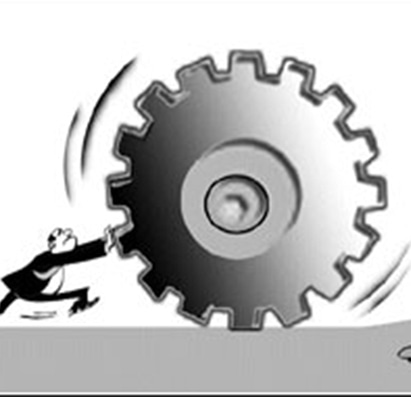
DURING the tenure of the caretaker government, the Ministry of Commerce had formulated a five-year strategy aimed at bolstering Pakistan’s exports from their current level of less than $30 billion to $100 billion by the 2027-28 fiscal. The primary focus is on revitalising the exports of clothing and textiles, with a target set at $50 billion, followed by $25 billion earmarked for agriculture as well as food, and another $25 billion for engineering goods and pharmaceuticals.
However, achieving this goal of more than threefold growth in export volume within a five-year time period not only presents significant challenges, given the prevailing economic conditions, but also causes stagnation in the industrial as well as agricultural sectors, and escalates cost of production because of already increased and increasing prices of energy, transportation, raw material and overheads. Unless the government swiftly implements drastic policy measures to prioritise the ease of doing business, such ambitious targets may remain elusive.
Furthermore, the needed engineering goods, recognised globally as a catalyst for augmenting national exports, hold considerable promise among, say, non-traditional export items. Despite possessing the requisite capacity and capability, a fair analysis of export performance over the last five years reveals a meagre average annual export value of approximately $200 million. This growth trajectory, on the other hand, falls far short of expectations, significantly lagging behind its true potential.
Nevertheless, Pakistan’s Look Africa policy is poised to bolster trade ties with African nations, particularly in the export of engineering goods. There have been numerous instances where Pakistan failed to capitalise on opportunities to export machinery and equipment to African countries, primarily due to a bureaucratic approach and the interplay of vested interests.
Until arund the early 2000s, Pakistan’s export of machinery and equipment had remained robust. However, in recent years, there has been a drastic decline in the export of these equiment. The Heavy Mechanical Complex (HMC) in Taxila, played a pivotal role in placing Pakistan on the global export map for capital goods.
Moreover, owing to the unique nature of engineering or capital goods, their marketing necessitates institutional support. This may not be easily possible within the existing setup of the Trade Development Authority of Pakistan (TDAP). Therefore, it would be prudent to establish an autonomous body rather urgently for the export promotion of engineering goods and services. Such an initiative would enable a more focussed approach that may ultimately facilitate the desired achievement of the 2027-28 target.
Hussain Ahmad Siddiqui
Islamabad
Published in Dawn, June 5th, 2024