Doctor says Gaza hospitals operating in ‘mediaeval’ conditions


BRUSSELS: Gaza hospitals are reduced to practising “mediaeval medicine”, a British surgeon recently returned from the bombarded Palestinian territory said on Monday.
“It’s absolutely true to describe it as mediaeval medicine. It is what you would hear about or read about what would be happening in Europe maybe 300, 400 years ago,” Dr Khaled Dawas, head of gastrointestinal surgery at University College London Hospitals, said in an interview.
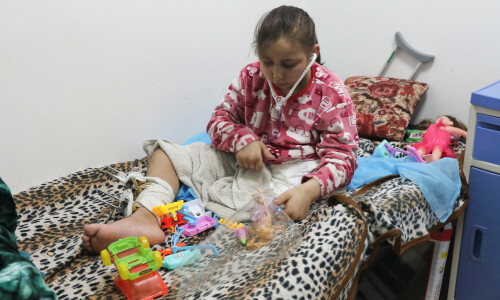
Dawas described dire conditions in Gaza, with medical staff operating virtually without supplies, power supplies intermittent and patients lying on the floor.
He returned at the end of April from his two-week stint to help overstretched Palestinian hospital surgeons — his second wartime stay there, following one in January.
Dawas was in Brussels to describe his experience to European Union officials.
“By April they were seeing this constant, constant volume of dying and dead bodies coming into the hospitals and any human wouldn’t be able to tolerate it,” he said.
“They carry on working, but you can see the effect of that. They’re all extremely burdened by what they’re doing.”
The 54-year-old surgeon, an Arabic-speaker who has Palestinian parents, said many people in Gaza wounded or needing other medical attention tried to avoid going to the hospitals because it “means pretty much a death sentence”. That was “because of the wound infections, because of the conditions”.
While the doctor said he felt “guilt” about leaving Gaza to return to his regular British medical work, from which he had taken leave, he said he would be back.
“I do hope that when I go back next time, that it’ll be when the ceasefire is in place. Because watching it unfold when you’re there is unbearable,” he said.
“It becomes more unbearable when you leave, actually, when you think back on what you’ve seen and what you’ve heard. And you wonder how people, any human being, can survive this for so long.”
Published in Dawn, May 28th, 2024