Govt unveils broader privatisation plan for state-owned enterprises

Pakistan will privatise all state-owned enterprises, with the exception of strategic entities, Prime Minister Shehbaz Sharif announced on Tuesday, broadening its initial plans to take only loss-making state firms private.
The announcement came after PM Shehbaz headed a meeting on the privatisation process of loss-making state enterprises, according to a statement from his office.
According to state-run Radio Pakistan, the premier said that the government’s job is not to do business but to ensure a business and investment friendly environment.
Additionally, he directed all federal ministries to take necessary action in this regard and cooperate with the Privatisation Commission, with the meeting being informed that “privatisation of power distribution companies has been included in privatisation programme 2024-2029”.
“It was informed that loss-making state-owned enterprises to be privatised on priority basis and that a pre-qualified panel of experts is being appointed in Privatisation Commission to speed up privatisation process,” according to Radio Pakistan.
It came a day after an International Monetary Fund (IMF) mission opened talks in Islamabad for a new long-term Extended Fund Facility (EFF) following Pakistan’s completion of a $3 billion standby arrangement last month.
Previously, Pakistan had only loss-making state-owned enterprises on its chopping block. Privatisation has long been on the IMF’s list of recommendations for Pakistan, which is struggling with a high fiscal shortfall.
The IMF says SOEs in Pakistan hold sizable assets in comparison with most Middle East countries, at 44 percent of GDP in 2019, yet their share of employment in the economy is relatively low. It estimates almost half of the SOEs operated at a loss in 2019.
Patchy success so far
Past privatisation drives have been patchy, mainly due to a lack of political will, market watchers say.
Any organisation that is involved in purely commercial work can’t be strategic by its very nature, which means there can’t be any strategic commercial SOEs, former privatisation minister Fawad Hasan Fawad told Reuters on Tuesday.
“So to me there are really no strategic SOEs,” he said.
“The sooner we get rid of them the better. But this isn’t the first time we have heard a PM say this and this may not be the last till these words are translated into a strategic action plan and implemented.”
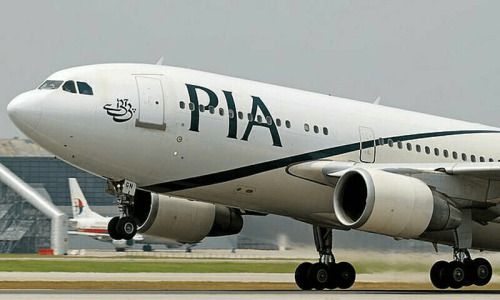
Islamabad has for years been pumping billions of dollars into cash-bleeding SOEs to keep them afloat, including one of the largest loss-making enterprises Pakistan International Airline (PIA), which is in its final phase of being sold off, with a deadline later this week to seek expressions of interest from potential buyers.
The government has listed 25 entities and assets on its privatisation list, including the PIA. A majority of the entities are in the power sector, including four power plants, two of which are over 1,200MWs, as well as 10 generation and distribution companies.
The list also includes the valuable Roosevelt hotel in New York’s Manhattan and two insurance companies.
The pre-qualification process for PIA’s selloff will be completed by end-May, the privatisation ministry told Tuesday’s meeting, adding discussions were underway to sell the airline-owned Roosevelt Hotel in New York.
It said a government-to-government transaction on First Women Bank Ltd was being discussed with the United Arab Emirates, and added that power distribution companies had also been included in the privatisation plan for 2024-2029.
“The loss-making SOEs should be privatised on a priority basis,” the premier said.