IAEA chief in Iran as concern grows in West over nuclear plan


 0
0


TEHRAN: UN atomic watchdog chief Rafael Grossi arrived in Iran on Monday, where he is expected to speak at a conference and meet officials for talks on Tehran’s nuclear programme.
The visit comes at a time of heightened regional tensions and with the International Atomic Energy Agency (IAEA) criticising Iran for lack of cooperation on inspections and other outstanding issues.
News agencies reported Grossi’s arrival “at the head of a delegation to participate in the nuclear conference and negotiate with top nuclear and political officials of the country”. He met with Foreign Minister Hossein Amir-Abdollahian and is scheduled to meet Atomic Energy Organisation of Iran chief Mohammad Eslami.
Grossi later said in a post on X, formerly Twitter, that at his meeting with the foreign minister he proposed “concrete practical measures” with the “aim of restoring process of confidence building and increasing transparency”.
At its opening ceremony, Eslami expressed hopes of cooperation with the IAEA, saying this was “at the forefront of the Islamic republic of Iran’s policies”.
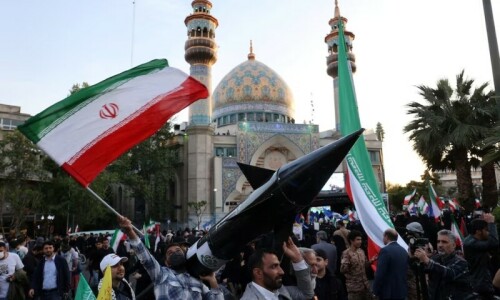
“We hope that the agency can play its role as an independent international institution free from political pressures,” he added. The three-day event is being held in Isfahan province, home to the Natanz uranium enrichment plant and where strikes attributed to Israel hit last month.
IAEA and Iranian officials reported “no damage” to nuclear facilities after the reported attack on Isfahan.
This was widely seen as Israel’s response to Iran’s first-ever direct attack on its arch-foe days earlier, which itself was retaliation for a deadly strike on Tehran’s Damascus consulate.
On Wednesday Eslami said he was “sure that these negotiations will further help clear ambiguities, and we will be able to strengthen our relations with the agency”.
Published in Dawn, May 7th, 2024