ISLAMABAD: The Judicial Commission of Pakistan (JCP), a body that plays a key role in appointing judges, is set to review proposed amendments to its 2010 rules that would change the traditional approach to selecting judges for the Supreme Court and high courts.
The proposed changes, scheduled for discussion at a JCP meeting tomorrow (Friday), aim to end the automatic elevation of high court chief justices to the Supreme Court and the appointment of the most senior judge as the chief justice of high courts. Instead, a more structured selection process involving multiple candidates for each vacancy is suggested, likely increasing competition among judges.
A key aspect of the amendments is the enhanced role of bar councils in the judicial appointments process.
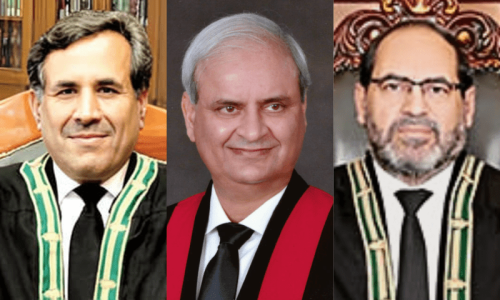
The draft of these amendments was finalised by a committee established on Dec 4, 2023, comprising its chairman Justice Syed Mansoor Ali Shah of the Supreme Court, co-chairman former judge Manzoor Malik and others.
Proposed amendments likely to increase competition among judges
The important areas of consideration for proposing amendments to JCP Rules, promulgated in 2010, include the process for convening meetings of the commission and making decisions; initiation of nomination(s) in the Supreme Court; initiation of nomination(s) in the high courts; adequate representation of the district judiciary and the bar for elevation; diversity; criteria for selection for appointment of judges to the Supreme Court and the high courts; confirmation of additional judges in the high courts; and the establishment of a secretariat of the commission, appointment of the secretary and other staff.
The committee proposed that “for the appointment of a judge of the Supreme Court, the chairperson shall propose three persons for each vacancy as per criteria prescribed and convene a meeting of the commission for deliberation not later than 15 days before the occurrence of the vacancy.”
“Thereafter, the commission shall nominate, by majority, one person against a vacancy to the parliamentary committee,” the proposed draft added.
For the elevation of chief justice of a high court, where traditionally the senior most judge was given this portfolio, the amendments proposed that the chief justice be appointed from a panel of five senior judges of the same high court.
“For the appointment of the chief justice of a high court, the chairperson shall convene a meeting of the commission for deliberation on the names of the five most senior judges of that high court one month before the occurrence of the vacancy,” it said.
The commission will forward one name to the parliamentary committee on the judges’ appointment.
The amendments also proposed the active participation of bar councils, as the representatives of the lawyers’ regulatory bodies felt themselves as silent spectators in the process of judges’ appointment in the superior judiciary even though their role was added through a constitutional amendment.
Published in Dawn, May 2nd, 2024