NAWAZ Sharif is set to take up the reins of PML-N party president once again — seven long years after he was barred from holding the position following his disqualification as prime minister in the Panama Papers case.
Today, with cases against him a thing of the past, Mr Sharif will formally assume the party position that, in his stead, had been filled by his younger brother PM Shehbaz Sharif. Publicly, his party may say that while this is a welcome development, there should be no deep speculation about what the move means for PML-N affairs. After all, PM Sharif’s decisions have been endorsed by his elder brother.
But given the country’s state of affairs, the delicate state of civil-military relations and the role of the judiciary, the formal return of Nawaz Sharif to the helm of party affairs is significant. No doubt, the younger Sharif’s decisions largely have the blessings of his elder brother, but it is no secret that there is a difference of tone between the two when it comes to setting the party narrative.
While one prefers to avoid rocking the boat and is open to taking direction, the other has a penchant for asserting himself and challenging the existing dynamics of power. That latter narrative was conspicuously absent during the PML-N leaders’ election campaign — a factor that some of the more vocal party members say contributed to the PML-N’s poor electoral performance.
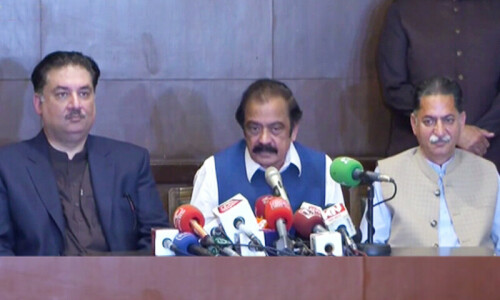
The PML-N’s internal dynamics have been turbulent, with important voices like Rana Sanaullah, Saad Rafique, and Javed Latif expressing differing opinions on party policies and the role of the military in politics. Mr Sanaullah’s recent statements about ‘undoing the injustice’ of Nawaz Sharif’s disqualification reflect a sense of grievance that has not entirely dissipated, and hint at undercurrents of discontent within the party.
With Nawaz Sharif as PML-N president, will we see more such grievances being aired? The PML-N’s future direction will depend heavily on his ability to build consensus within the party and to manage the inevitable tensions that arise from differing opinions.
Nawaz Sharif’s return to the position of party president comes at a time when the economy is under immense strain, with inflation soaring and public discontent rising. The political landscape is equally fraught, with the establishment casting a dark shadow over any attempt at political autonomy.
More importantly, at 74 years of age, and less energetic and spirited than he was seven years ago, Mr Sharif’s health and stamina will reflect in his decision-making and the party meetings he chairs.
He will have to deftly navigate through tumultuous waters, but whether he can strike a balance between asserting democratic authority and avoiding direct confrontation with the establishment remains to be seen. Will buried hatchets remain buried? Time will tell.
Published in Dawn, April 28th, 2024