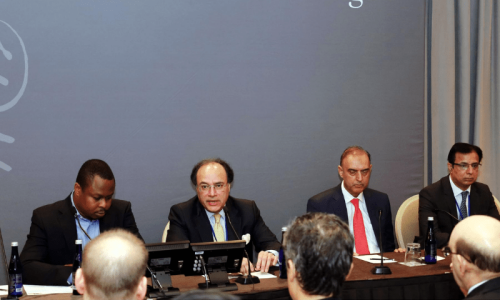
FINANCE Minister Muhammad Aurangzeb says that the economy has the potential to grow 10 times its size to $3tr for Pakistan to become a high-middle-income country by 2047. That kind of growth or economic transformation is difficult to achieve but not impossible.
India accomplished this feat to become the world’s fifth-largest economy by increasing its GDP size from less than $275bn to over $3.7tr in 30 years after it began to implement reforms in earnest to overcome a severe crisis resulting from external debt. Ever since then, it has not returned to the IMF for help and is now well on its way to becoming the world’s third-largest economy after the US and China. The latter country has grown at a very high annual rate of 10pc for decades to transform itself into the world’s second-largest economy and rescue millions of its citizens from poverty.
There are also examples of countries from Southeast Asia, which were poorer and less developed than us a few decades ago but have surged far ahead now. Even if these economies have not fully overcome poverty or become high-middle-income nations, their examples show us the road to better days. But, living on borrowed money as we are, the periodic articulation of a desire to grow rich will not help.
If Pakistan is desirous of becoming a middle-income economy and halting the perennial cyclical crisis that has led Mr Aurangzeb to Washington to seek the country’s 24th bailout from the IMF, it must follow the path others have successfully taken. It has to honestly and diligently implement reforms to limit the role of government in the economy, encourage the private sector to lead growth, and integrate the economy with the region and global economy by breaking down barriers to trade and investment.
These reforms, however, will have to be based on enduring fiscal stabilisation policies. A similar message was conveyed by IMF’s Middle East and Central Asia director Jihad Azour the other day when he emphasised that giving precedence to reforms to revive the Pakistani economy was more important than the loan amount being negotiated. “What is important at this stage is to accelerate the reforms, double down on the structure of reforms in order to provide Pakistan with its full potential of growth,” he said.
The problem with us is that our ruling elite is still trying to find a way around the tough reforms that will hit their privileges. The creation of SIFC as an island of facilitation for certain foreign or local investors is one example of this attitude. But it will be difficult to carry on like this. With geopolitical rent becoming more and more difficult to draw, a debt-ridden country cannot daydream its way into becoming a middle-income economy.
Published in Dawn, April 22nd, 2024