Iranian commander says Tehran could review ‘nuclear doctrine’ amid Israeli threats


 0
0


Iran could review its “nuclear doctrine” following Israeli threats, a senior Iranian Revolutionary Guards (IRGC) commander said on Thursday, raising concerns about Tehran’s nuclear programme which it has always said was strictly for peaceful purposes.
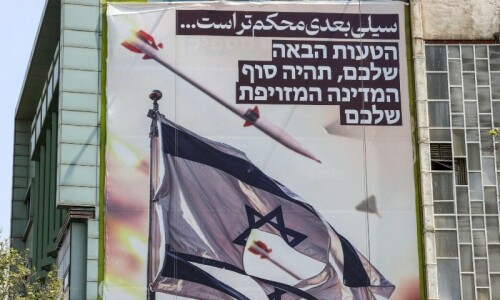
Israel has said it will retaliate against Iran’s April 13 missile and drone attack, which Tehran says was carried out in response to a suspected Israeli strike on its embassy compound in Damascus earlier this month.
“The threats of the Zionist regime (Israel) against Iran’s nuclear facilities make it possible to review our nuclear doctrine and deviate from our previous considerations,” Ahmad Haghtalab, the Guards commander in charge of nuclear security, was quoted as saying by the semi-official Tasnim news agency.
Iran’s Supreme Leader, Ayatollah Ali Khamenei, has the last say on Tehran’s nuclear programme, which the West suspects has military purposes.
In 2021, Iran’s then-intelligence minister said Western pressure could push Tehran to seek nuclear weapons, the development of which Khamenei banned in a fatwa, or religious decree, in the early 2000s.
“Building and stockpiling nuclear bombs is wrong and using it is haram … Although we have nuclear technology, Iran has firmly avoided it,” Khamenei reiterated in 2019.
Iran’s foreign ministry did not immediately respond to a Reuters request for comment.
“If the Zionist regime wants to take action against our nuclear centres and facilities, we will surely and categorically reciprocate with advanced missiles against their own nuclear sites,” Haghtalab said.
Indirect talks between Tehran and Washington to revive Iran’s 2015 nuclear pact stalled since 2022. The accord, aimed at keeping Iran from developing a nuclear weapon, required Tehran to accept restrictions on its nuclear program and more extensive United Nations inspections, in exchange for an end to UN, European Union and US sanctions.
The deal, which had capped Iran’s uranium enrichment at 3.67 per cent, was abandoned in 2018 by then-US president Donald Trump, who said it was too generous to Tehran.
Rafael Grossi, the head of the UN nuclear watchdog, said in February that Iran continued to enrich uranium at rates up to 60pc purity, which far exceeds the need for commercial nuclear use.
US, UK unveil sweeping sanctions on Iran’s drone programme
Meanwhile, the United States and the United Kingdom announced widespread sanctions against Iran’s military drone programme in response to its recent direct attack against Israel.
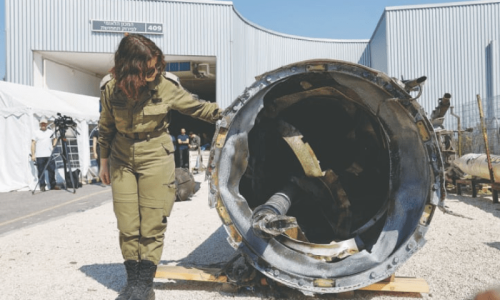
Washington is targeting “16 individuals and two entities enabling Iran’s UAV production, including engine types that power Iran’s Shahed variant UAVs, which were used in the April 13 attack”, the Treasury Department said in a statement, referring to Iran’s unmanned aerial vehicle programme.
The UK is also imposing sanctions “targeting several Iranian military organisations, individuals and entities involved in Iran’s UAV and ballistic missile industries”, the Treasury Department said.
“Today, in coordination with the United Kingdom and in consultation with partners and allies, we are taking swift and decisive action to respond to Iran’s unprecedented attack on Israel,” US Treasury Secretary Janet Yellen said in a statement.
“We’re using Treasury’s economic tools to degrade and disrupt key aspects of Iran’s malign activity, including its UAV programme and the revenue the regime generates to support its terrorism,” she continued.
“We will continue to deploy our sanctions authority to counter Iran with further actions in the days and weeks ahead,” she added.
Alongside its sanctions against Iran’s UAV programme, the US is also sanctioning five companies providing parts for Iran’s steel industry.
“Iran’s metals sector generates the equivalent of several billion dollars in revenue annually, with the majority coming from steel exports,” the Treasury Department said, adding it had also sanctioned an automaker involved in providing “material support” to the IRGC.
Britain also placed sanctions on Iranian military entities, including the general staff of the armed forces and the IRGC navy, an official notice showed.
The British sanctions target 13 entities or individuals in total, the notice showed.