JERUSALEM: Israel and Hamas have accused each other of undermining negotiations for a truce in Gaza and a hostage release deal, although the talks have not collapsed.
While Hamas-backer Iran was preparing to launch hundreds of drones and missiles at Israel in retaliation for a deadly Damascus strike, the Palestinian group announced on Saturday that it had delivered its response to the latest ceasefire proposal. Without explicitly rejecting the draft deal, Hamas reiterated its longstanding demands for a permanent ceasefire and the full withdrawal of Israeli forces from the Gaza Strip, which Israeli officials have repeatedly opposed.
Israeli Prime Minister Benjamin Netanyahu has instead reiterated his determination to launch a ground invasion of Rafah, the last city in Gaza yet to face such a fate and which Israel insists is Hamas’s last major holdout, despite strong opposition from the United States.
Netanyahu accused Hamas of being the “only obstacle” to a deal that would free the Israeli prisoners. “The cabinet and the security forces are united in their opposition to these unfounded demands,” he said, adding that Hamas “has refused any deal and any compromise proposal”.
Palestinian group insists on permanent ceasefire with full withdrawal of Israeli forces from Gaza; Mossad says Hamas does not want a humanitarian deal or prisoner swap
On Sunday, Israel’s Mossad spy agency said in a statement released by Netanyahu’s office that Hamas had rejected the proposal, and said it “proves” that Hamas leader Yahya Sinwar “does not want a humanitarian deal” and the return of prisoners.
Sinwar was “continuing to exploit the tension with Iran”, Mossad said, and was aiming for “a general escalation in the region”.
The comments came just hours before Iran launched more than 300 drones and missiles at Israel, the vast majority of which intercepted according to Israel.
‘Not at a standstill’
Mossad said Israel would “continue to work to achieve the objectives of the war against Hamas with all its might, and will turn every stone to bring back the hostages from Gaza”.
Despite the apparent gulf between the two sides, the talks, mediated by Egypt, the United States and Qatar, are ongoing in the Egyptian capital.
“The negotiations are not at a standstill” but the mediators will have to go back to the drawing board, said Hasni Abidi of CERMAM, a Geneva-based think tank specialising in the Mediterranean and the Arab world.
A framework being circulated in Cairo would halt fighting for six weeks and see the prisoner exchange, as well as more aid deliveries into the besieged Gaza Strip.
A Hamas source told AFP that, ultimately, later stages of the ceasefire would see all prisoners released, Israel withdrawing all its forces from Gaza, the lifting of the siege and the reconstruction of the territory.
However, so far every attempt to negotiate a durable ceasefire in the six-month-long war has failed.
In November, a seven-day truce enabled the exchange of 80 Israeli prisoners for 240 Palestinian prisoners, as well as 25 captives freed outside of the truce mechanism.
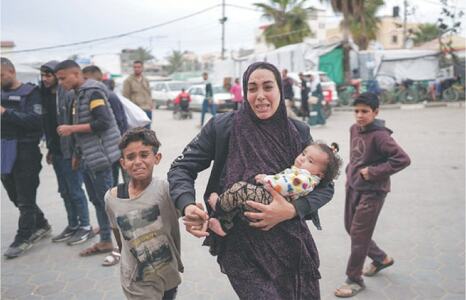
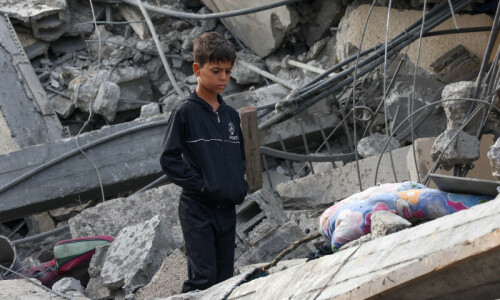
The Israeli attacks on Gaza escalated after Hamas’s deadly raid on southern Israel, which resulted in the killing of 1,170 Israeli settlers and military personnel on October 7, 2023. Since then, Israeli forces have killed at least 33,729 people, mostly women and children, according to the health ministry in the Hamas-run territory.
The Hamas fighters also held around 250 prisoners, 129 of whom remained in Gaza, including 34 that the Israeli army says are dead.
Earlier this month, Israel withdrew most of its troops from the Gaza Strip, leaving only a single brigade in central Gaza, while continuing to launch air strikes and bombardments. However, Netanyahu has repeated his determination to launch a ground invasion of Rafah, where around 1.5 million Gazans are sheltering, despite opposition from Israel’s top ally the United States.
The Israeli premier also faces increasing pressure from the settlers and the families of the prisoners, with weekly demonstrations in Tel Aviv and Jerusalem demanding an end to his government.
Published in Dawn, April 15th, 2024