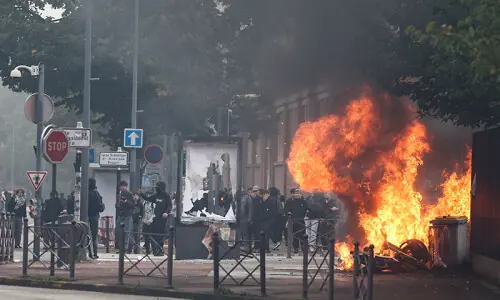
HALDWANI: After his brother was murdered in anti-Muslim riots, Pervez Qureshi watched the videos he believes incited the killers, part of a wave of hatred being fomented on social media before India’s elections.
Analysts warn increasingly available modern technology is being used to deliberately exploit divisions.
“Videos and messages were shared on Facebook and WhatsApp which contained inflammatory language and incitement to violence,” Qureshi said, recalling the attack on his brother Faheem in February in Haldwani, Uttarakhand state.
“It poisoned the atmosphere.”
Nearly 550 million more Indians now have access to the internet than when Prime Minister Narendra Modi came to power a decade ago, according to figures from the Internet and Mobile Association of India.
The Bharatiya Janata Party (BJP) is widely expected to win a third term in elections that begin on April 19.
‘Atmosphere of hatred’
But critics accuse the BJP’s sophisticated social media apparatus of also fanning the flames of division.
Haldwani community leader Islam Hussain said tensions were already high before February’s violence, after months of incendiary social media posts calling Muslims “outsiders”.
“It was said that due to the increasing population of Muslims, the social demography of Uttarakhand is changing”, he said. “Right-wing social media cells have a big role in creating an atmosphere of hatred against Muslims.” Clashes erupted after the authorities said a mosque had been built illegally, and a Muslim group gathered to prevent its demolition.
Hindu residents gathered to cheer on the police clampdown, chanting religious slogans and throwing rocks at the crowd.
Footage of the riots spread swiftly on social media. Egged on by online calls to mobilise, Hindu mobs rampaged through the streets.
Qureshi said his brother Faheem, 32, was killed by Hindu neighbours after they first torched his car.
‘Triggers an incident’
But Saini, coordinator for the BJP’s youth wing, said the online team he leads does not encourage violence — and is under strict instruction not to “write anything against anyone’s religion”.
He said his colleagues had mobilised quickly on the day riots broke out to provide information, not to stir up trouble.
“When we got the news, we immediately started preparing graphics, videos and text messages to reach people with the correct and accurate information related to the incident,” he said.
According to him, the initial violence was clashes between police and a Muslim group — and blamed Modi’s opponents for instigating riots to tarnish the government’s image.
But critics disagree. Raqib Hameed Naik, from research group Hindutva Watch, said that the BJP’s IT cell had generated anger towards minorities, by promoting the government’s Hindu-nationalist agenda.
Published in Dawn, April 5th, 2024