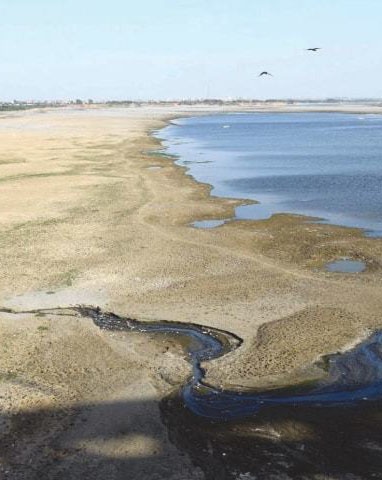
THIS is with reference to the editorial ‘Revitalising the Indus’ (Feb 15). The recent acknowledgment of the Living Indus Initiative (LII) as a United Nations World Restoration Flagship project signifies a pivotal moment, instilling hope for the future of the Indus River and the nation that it sustains. This comprehensive initiative signifies a paradigm shift.
The mighty Indus River, beyond being a mere geographical entity, serves as the lifeblood of Pakistan, supporting millions of livelihoods.
However, years of unchecked exploitation and environmental degradation have pushed this crucial artery to the brink, endangering not only its aquatic inhabi- tants, but also the survival of communities that are fully dependent on its resources.
The LII stands as a testament to meticulous planning and collaboration, engaging academia, experts, stakeholders and provincial governments in extensive consultations. Moreover, this timely and comprehensive approach reflects a deep understanding of the diverse challenges confronting the Indus. By addressing various aspects of the crisis, ranging from promoting nature-based resilience in agriculture to combating industrial pollution as well as widely investing in green infrastructure, the LII presents an integrated framework which aims at sustainable restoration and revitalisation.
However, restoring an ecosystem of such magnitude requires a multifaceted approach that extends beyond financial support. This approach not only necessi- tates empowering and engaging local communities, but also raising public awareness, and implementing sustainable and effective resource management practices. Empowering communities involves integrating their knowledge, traditions and needs into decision-making processes to ensure the initiative’s smooth functioning and long-term sustainability.
Furthermore, fostering public awareness is crucial for garnering widespread support as well as creating a culture of responsible water management.
Through effective and continuous targeted educational campaigns and outreach programmes, the LII can engage the public while broadening their understanding of the significance of the river’s plight. By instilling a sense of collective responsibility among community members, the LII can mobilise communities and individuals to actively participate in conservation efforts and advocate for sustainable practices.
The successful implementation of the LII hinges on concrete actions to address key environmental challenges. Through concerted efforts, we can safeguard the Indus River’s invaluable ecosystem, and pave the way for a sustainable future.
Majid Burfat
Karachi
Published in Dawn, March 9th, 2024