0
0

ISLAMABAD: The International Water Management Institute Pakistan on Friday organised a consultation workshop on the current status of water accounting in the four provinces of Pakistan and developing national level water accounting guidelines.
Speaking on the occasion, an expert said groundwater data was unavailable in the country which hindered accurate decision making for water management.
The workshop aimed to support the implementation of the National Water Policy (NWP) and was organised under the UK Aid-funded Water Resource Accountability in Pakistan (WRAP) Programme Component 1: Climate Resilient Solutions for Improving Water Governance (CRS-IWaG).
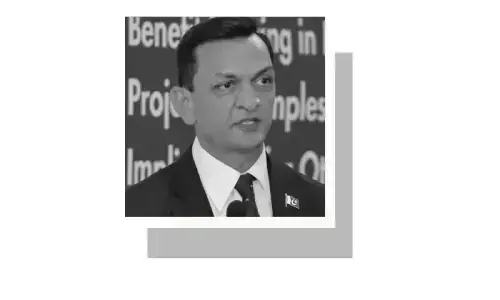
Dr Mohsin Hafeez, Director for Water, Food and Ecosystems and Team Leader for the WRAP Programme, briefed the meeting on the provincial consultations for the water accounting journey. He said IWMI Pakistan had initiated work on water accounting and water resources assessment at the federal level under the WRAP programme component 1: CRS-IWaG.
Furthermore, he said, developing a national water accounting framework would enable the government to make informed decisions and resolve disputes between the provinces of Punjab, Sindh, KP and Balochistan. He added that the government had information on surface water for the Indus Basin, but groundwater data was unavailable which hindered accurate decision-making for water management.
While giving an overview of the WRAP programme component 1, Dr Hafeez said IWMI Pakistan had developed a water accounting framework at the federal level in Okara district. In addition, Eddy Covariance flux towers were installed in Okara, Chakwal, Rahim Yar Khan and Sheikhupura, which would provide data on water and carbon emissions in agriculture and contribute to agroecological zoning.
Dr Hafeez also mentioned that IWMI Pakistan organised four consultation workshops at the provincial levels. The workshops brought together key stakeholders, including federal and provincial government officials, policymakers, water experts and practitioners from across the country, to discuss and deliberate on the importance of water accounting and its implications for sustainable water management.
As chief guest, Secretary Ministry of Water Resources Syed Ali Murtaza spoke on the government’s commitment to addressing the complex interplay of water, food and climate challenges. He expressed concern over the lack of a water framework in Pakistan for 70 years and highlighted the groundwater depletion situation in Multan and Lahore.
“Water governance is only implemented to a certain extent in Punjab. The groundwater level in Multan has plummeted to 600 feet while in Lahore it is decreasing by three feet each year. Despite the existence of the Punjab Water Act and Water Policy, Wasa pumps 350 million gallons of water daily in Lahore. It is challenging to prevent private individuals from pumping water, but solar pumping can be supported as a solution. However, it should not be allowed without any law in place,” he said.
Published in Dawn, March 9th, 2024