India offers protesting farmers support prices on corn, cotton and pulses


 0
0


The Indian government has offered guaranteed support prices for pulses, corn and cotton in a bid to break a deadlock with protesting farmers, Trade Minister Piyush Goyal said after week-long clashes between security forces and protesters.
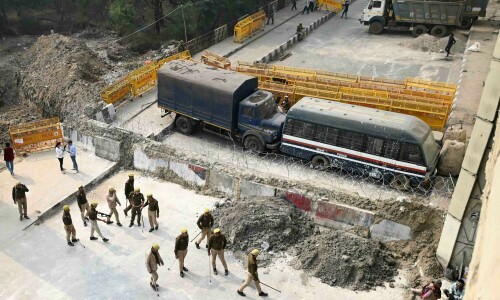
Tear gas and barricades were used to deter the farmers, who form an influential voting bloc, months ahead of a general election due by May, in which Prime Minister Narendra Modi seeks a record third term.
Sunday’s comments followed marathon talks with farmers’ unions after the protesters, who are demanding higher prices backed by law for nearly two dozen crops, were halted at a distance of about 200km from New Delhi.
Goyal said the government had proposed five-year contracts for a minimum support price to farmers who diversify their crops to grow pigeon peas, black matpe, red lentils and corn, paid by cooperative groups it promotes.
“These organisations will buy the produce and there will be no limit on quantity,” Goyal told reporters in the northern city of Chandigarh, adding that a similar price guarantee would also be offered to farmers who diversify and produce cotton.
The farmers’ unions said they would decide on the proposal within a day or two, after reaching a consensus among themselves.
Switching more crops to pulses from those such as rice and wheat that require more water will not only benefit a depleting water table but also help cut back on imports of pulses.
The world’s biggest importer of pulses, India has struggled to hold back increases in the prices of pigeon peas and black matpe.
Domestic corn demand has also been rising as the poultry and ethanol industries boost consumption.
Police have used tear gas and barricades to stop thousands of farmers, who mainly grow wheat and rice, from marching to New Delhi, to press their demand that the government ensure a minimum price for all their produce.