ISLAMABAD: As many as 28 environmental samples collected from 19 districts in January and two collected from Quetta and Khuzdar in December have tested positive for wild poliovirus type 1 (WPV1).
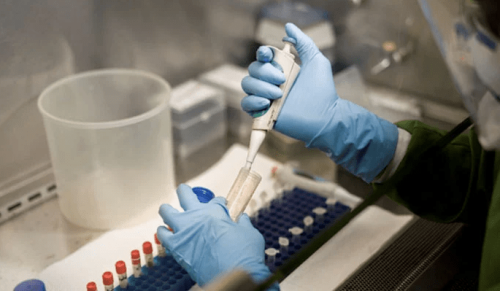
According to an official of the Regional Reference Laboratory for Polio Eradication at the National Institute of Health (NIH), the virus was found in four sewage samples each from Quetta and Karachi East, in two samples each from Chaman, Peshawar, Karachi South and Karachi Keamari, and in one sample each from Karachi Korangi, Karachi Central, Karachi Malir, Jamshoro, Sukkur, Hyderabad, Pishin, Kech, Nasirabad, DG Khan, Rawalpindi and Lahore collected between January 2 and January 16.
“The detections have brought the number of positive environmental samples reported in 2024 to 28 and 126 in 2023. All detected positive samples contain the imported virus cluster, YB3A,” he said.
Federal Minister for Health Dr Nadeem Jan stated that the imported virus cluster was found in 120 of 126 positive sewage samples and three human cases last year.
Federal Secretary for Health Iftikhar Ali Shallwani said that Pakistan was committed to wiping the virus out and was aiming to interrupt transmission by the end of this year.
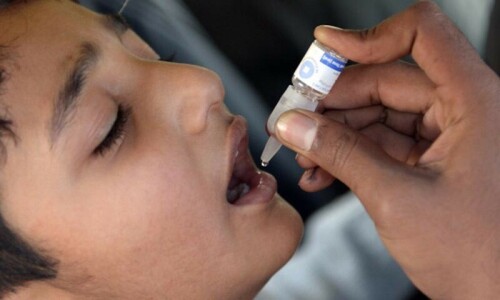
“Last year, we held several mass vaccination campaigns and utilised innovative strategies to reach children from transit vaccination to nomadic vaccination and integrated health camps. These efforts will continue at full pace this year as well to ensure that all children are protected,” he said.
“Protecting children from this paralytic disease is our top priority and we will continue our all-out efforts to end polio in Pakistan,” the secretary said.
Coordinator for the National Emergency Operations Center for Polio Eradication Dr Shahzad Baig said that multiple vaccination campaigns were held last year to boost children’s immunity, adding that a nationwide campaign was conducted from January 8 to 14 and several more are planned in all districts of detection.
Published in Dawn, February 4th, 2024