ISLAMABAD: Pakistan has reached out to the US and Canada over Indian role in orchestrating the assassinations of two Pakistani citizens within its borders last year.
A senior Pakistani diplomat disclosed that this was done for sharing information with the two countries, who had also been victims of India’s “transnational killings programme”.
The diplomat said operations in three countries resembled in sophistication, compartmentalisation and the use of criminal syndicates.
New Delhi has been facing international criticism and investigation due to accusations of running “a covert assassination programme” that targets its critics and opponents abroad.
This scrutiny had intensified following two major incidents: the murder of Hardeep Singh Nijjar, a Sikh separatist, in Canada, and a foiled plot to assassinate Gurpatwant Singh Pannun, another prominent Sikh figure and separatist leader, in New York.
These incidents suggest a “pattern of operations by the Indian government to silence dissent or opposition beyond its borders, utilising secretive and illegal methods”. These allegations have raised concerns about sovereignty, international law, and the safety of political dissidents globally.
The indictments brought against one Nikhil Gupta over attempt to kill Mr Pannun revealed that it had links to Mr Nijjar’s killing. Mr Gupta had been working under the instructions of an Indian official.
Following Canada’s allegations regarding Mr Nijjar’s killing, the United States, which had supplied Canada with crucial intelligence on the incident, formally called on Delhi to collaborate with Ottawa in conducting thorough investigations.
India’s intelligence agency, the Research and Analysis Wing, has long been implicated in executing terrorist activities in Pakistan. Lately, it was suspected of utilising criminal groups and operatives stationed in the United Arab Emirates for carrying out assassinations of Sikh and Kashmiri separatists in Pakistan.
A noticeable acceleration in these occurrences was witnessed last year.
Islamabad is investigating around 10 such cases, but in two cases — the assassination of Muhammad Riaz in Rawalakot last September and Shahid Latif in Sialkot the previous October, Indian involvement has been conclusively established, the diplomat asserted.
Both victims are believed to have had links with the uprising in India-held Kashmir.
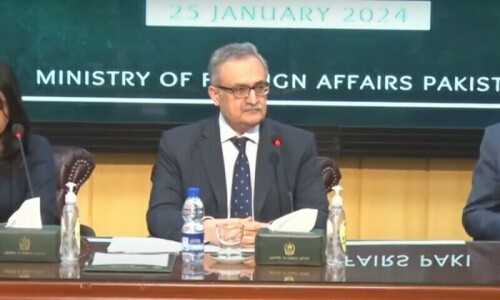
“We have credible evidence of links between Indian agents and assassination of two Pakistani nationals on Pakistani soil,” Foreign Secretary Syrus Sajjad Qazi said at a media briefing earlier this week. He added that India must be held accountable for its “blatant violation of international law.”
Published in Dawn, January 27th, 2024