India’s Sun probe reaches solar orbit
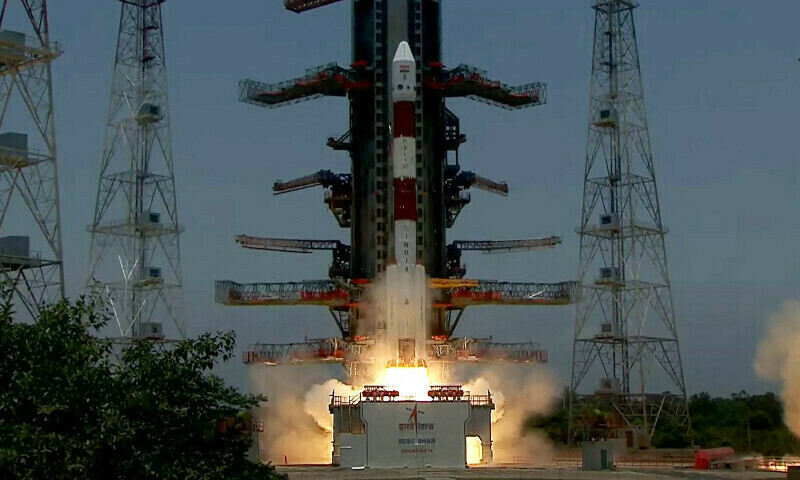
NEW DELHI: India’s solar observation mission on Saturday entered the Sun’s orbit after a four-month journey, the latest success for the space exploration ambitions of the world’s most populous nation.
The Aditya-L1 mission was launched in September and is carrying an array of instruments to measure and observe the Sun’s outermost layers.
India’s science and technology minister Jitendra Singh said on social media that the probe had reached its final orbit “to discover the mysteries of Sun-Earth connection”.
The US and the European Space Agency have sent numerous probes to the centre of the solar system, beginning with Nasa’s Pioneer programme in the 1960s. Japan and China have both launched their own solar observatory missions into Earth’s orbit.
But the latest mission by the Indian Space Research Organisation is the first by any Asian nation to be placed in orbit around the Sun.
On the occasion, Prime Minister Narendra Modi said, “It is a testament to the relentless dedication of our scientists.”
Aditya, named after a Hindu Sun deity, is now at a point where the gravitational forces of both celestial bodies cancel out, allowing it to remain in a stable halo orbit around the Sun.
The orbiter, which reportedly cost $48 million, will study coronal mass ejections, a periodic phenomenon that sees huge discharges of plasma and magnetic energy from the Sun’s atmosphere.
These bursts are so powerful they can reach the Earth and potentially disrupt the operations of satellites. The mission also aims to shed light on the dynamics of several other solar phenomena by imaging and measuring particles in the Sun’s upper atmosphere.
Published in Dawn, January 7th, 2024