0
0

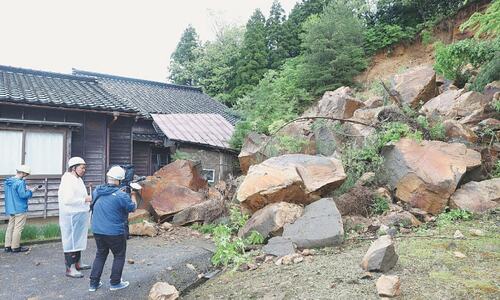
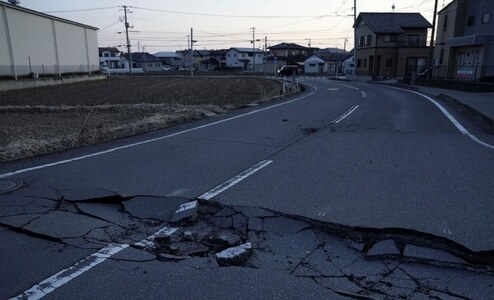
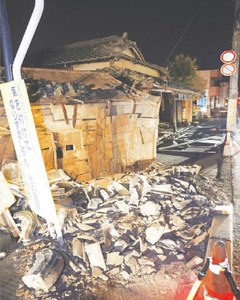
A powerful 7.5 earthquake hit central Japan on Monday, the USGS said, prompting tsunami warnings and authorities to urge people in the area to move to higher ground.
“All residents must evacuate immediately to higher ground,” national broadcaster NHK said after the quake hit the Noto region in Ishikawa prefecture around 4:10pm (7:10am GMT).
Hazardous tsunami waves were possible within 300 kilometres (190 miles) of the quake’s epicentre along the Japanese coast, the Hawaii-based Pacific Tsunami Warning Center said.
A tsunami of 1.2 metres was confirmed to have arrived in Wajima city in Ishikawa prefecture.
But a much higher tsunami of 5m was expected to arrive in Noto in the same region, the Japan Meteorological Agency (JMA) said.
The JMA said the Noto region, on the Sea of Japan side of Japan’s main island of Honshu, experienced a rapid succession of quakes, starting with a 5.7 magnitude tremor at 4:06pm local time.
This was followed by a 7.6-magnitude quake at 4:10pm, a 6.1-magnitude quake at 4:18pm, a 4.5-magnitude one at 4:23pm, a 4.6-magnitude quake at 4:29pm, and a 4.8-magnitude quake at 4:32pm.
Another quake with a magnitude of 6.2 hit soon after, the US Geological Survey said.
The largest of the quakes prompted broadcasters to switch to special programming and make urgent calls for affected residents to leave for higher ground.
“We realise your home, your belongings are all precious to you, but your lives are important above everything else. Run to the highest ground possible,” a presenter on broadcaster NHK told viewers.
Russia’s Sakhalin island near Japan and the Pacific city of Vladivostok were also on “alert” due to a possible tsunami risk.
Emergency services in Sakhalin declared a “tsunami alert”, saying the island’s western coast “may be affected by tsunami waves.” City authorities in Vladivostok also announced an alert and ordered fishermen to “urgently get back to shore”.
Japan has strict construction regulations intended to ensure buildings can withstand strong earthquakes and routinely holds emergency drills to prepare for a major jolt.
But the country is haunted by the memory of a massive 9.0-magnitude undersea quake off northeastern Japan in March 2011, which triggered a tsunami that left around 18,500 people dead or missing.
The 2011 tsunami also sent three reactors into meltdown at the Fukushima nuclear plant, causing Japan’s worst post-war disaster and the most serious nuclear accident since Chernobyl.
In March 2022, a 7.4-magnitude quake off the coast of Fukushima shook large areas of eastern Japan, killing three people. The capital Tokyo was devastated by a huge earthquake a century ago in 1923.