Battle of ideas

THE human journey through millennia has essentially been a battle of ideas. Wars and peace, conquests and defeats, empires rising to glory or falling to the depths of infamy, and evolution in governance and economic systems are all outcomes of that battle. The stronger ideas win, particularly when they have broad ownership in society.
Some 2,000 years ago, three Greek philosophers — Plato, his teacher Socrates and student Aristotle — discussed the organising principles of political governance, favouring rule by intellectual aristocracy. In the Middle Ages, European philosophers challenged the prevailing thought on how society was to be governed. John Locke, the 17th-century English philosopher, was one of the earliest voices of liberalism in Europe, while France’s Voltaire believed in the power of reason and religious tolerance. The cumulative effects of these ideas saw Europe embrace democracy, constitutionalism, and liberalism.
America’s founding fathers sought to organise governance around the ideas of freedom, liberty, democracy and capitalism, which for over two centuries have enjoyed the wider ownership of the American people. Karl Marx’s theory of class struggle and revolution led to the creation of the Soviet Union, but failed the downtrodden it intended to serve. Mustafa Kemal built a new Turkey based on the ideas of secularism and Turkish nationalism, which has stood the test of time. World War II was the product of Hitler’s flawed idea that the German race was superior to others. The UN was also an idea that rightly emphasised that the world had more to gain from cooperation than confrontation.
Deng Xiaoping’s idea of pursuing a market economy while keeping the communist system intact has worked well for the Chinese. Lee Kwan Yew built modern-day Singapore on the ideas of meritocracy, pragmatism and clean governance, which took his country from the Third to the First World.
Without a shared goal, we have been politically unstable.
The EU, too, was an idea, that brought Europe sustained peace and wealth. Many nations in Asia, Africa and Latin America threw off the colonial yoke thanks to the idea of the right to self-determination. Meanwhile, Narendra Modi is changing India’s secular and pluralistic credentials by reviving the RSS idea of Hindutva, creating conditions for commotion in India.
The creation of Pakistan was also an idea based on Allama Iqbal’s concept of separate state(s) for India’s Muslims. Mohammad Ali Jinnah translated this idea into reality. After independence, however, Pakistan could not implement the Quaid’s vision as enunciated by him on Aug 11, 1947. Instead, every successive ruler fielded half-baked ideas on how the country was to be run. Gen Ayub pursued basic democracies, capitalism, and alignment with the West as his governance principles. Bhutto tried to steer the country towards Islamic socialism and a tilt towards China, the Muslim world and developing countries. Gen Zia spent nearly a decade on Islamising laws and governance. Nawaz Sharif liberalised the economy and wanted economic engagement with Pakistan’s neighbours. Benazir Bhutto was left-leaning and a strong advocate for labour and human rights. Gen Musharraf conceived the idea of ‘enlightened moderation’, whatever that meant.
Without a shared national purpose, Pakistan has remained politically unstable and polarised. Economically, policies changed, sometimes drastically under a new government. Socially, extremism, terrorism, and separatism kept governments unnerved. Hence, vertical inequalities (between the rich and poor) and horizontal inequities (among different regions of the country) accentuated.
Looking ahead, can Pakistanis rally around an idea that enjoys the consensus of the entire nation and its institutions? One way is to implement the Quaid’s vision of Pakistan as a truly democratic and just society. In this spirit, last year, the National Security Policy proposed a citizen-centric national purpose: the safety, security, dignity and prosperity of every citizen. However, this approach can work well only if society is ready to free itself from elite capture.
The solution lies partially in instituting effective local governments. No democracy anywhere has thrived without delivering good governance at the grassroots. The size of our provinces must also be rationalised so that the people of smaller provinces do not feel alienated. Job creation for our youth should be at the heart of economic policies. The private sector should be facilitated, not just regulated. Externally, Pakistan should begin to view its relationships through an economic lens.
The idea of a Pakistan where all citizens feel safe and have dignity, as well as find opportunities for leading a quality life, can help us regain our lost status in the comity of nations.
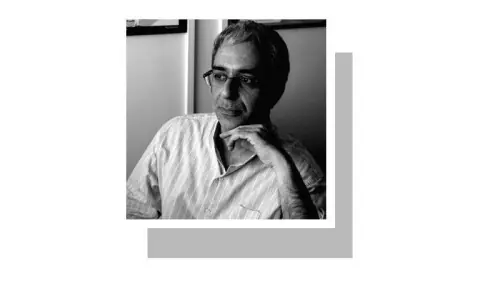
The writer is a former foreign secretary, and chairman, Sanober Institute Islamabad.
Published in Dawn, December 31st, 2023