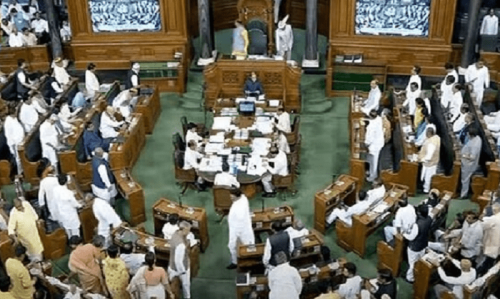
India’s parliament on Thursday rushed through the country’s biggest criminal justice overhaul since the British colonial era, alarming rights campaigners who say the new laws give authorities too much power.
Sweeping changes to the colonial-era Penal Code and two other laws remove archaic references to the British monarchy, redefine the scope of “terrorism” offences, and introduce new punishments for mob lynchings and crimes against women.
Home Minister Amit Shah said when unveiling the three proposed laws in August that the old statutes had been designed to “strengthen colonial rule” and had outlived their purpose.
“The motive of the three bills is not to give punishment but to give justice,” he told lawmakers on Thursday.
The new laws quickly passed through both houses of parliament over two days with minimal debate, after nearly 150 opposition lawmakers were suspended over the past week for protesting an unrelated issue.
New provisions in the laws would impose the death penalty on perpetrators of mob lynchings and the rape of a minor, as well as a 20-year minimum sentence in cases of gang rape.
They introduce community service provisions for petty crimes to ease the chronic backlog in Indian courts, which have millions of pending cases.
The laws also heighten police powers over the detention of suspects and expand terrorism offences to include acts that could threaten India’s sovereignty or “economic security”.
Amnesty International said the new criminal justice framework would intensify a “targeted crackdown on freedom of expression in the country”.
The laws “dangerously broaden the definition of ‘terrorism’, reintroduce sedition, retain the death penalty, and extend police custody”, the rights watchdog said.
India’s Penal Code and other statutes governing the police and courts were introduced in the 19th century, while the country was governed by the British crown.
The legal overhaul is the latest effort by Prime Minister Narendra Modi’s Hindu-nationalist government in its campaign to remove lingering symbols of colonial rule from India’s history books, urban landscape and political institutions.
Modi’s government has passed a number of laws through parliament this week while more than half of the legislature’s opposition lawmakers were barred from attending.
They had been protesting a security breach last week that saw a member of the public enter the floor of the lower house and set off a smoke canister.
Parliament also passed a telecoms bill that allows the government to temporarily take control of and suspend telecom services in the interest of national security.
The new telecoms law’s expanded powers have been criticised by campaigners who say India already regularly uses internet shutdowns to manage unrest.
Lawyer and digital rights advocate Apar Gupta told AFP that the law would uphold the government’s power to shut down the internet “without any statutory safeguards”.