0
0

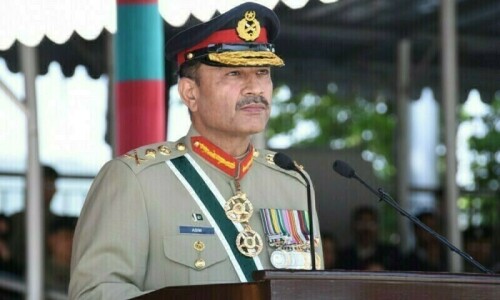
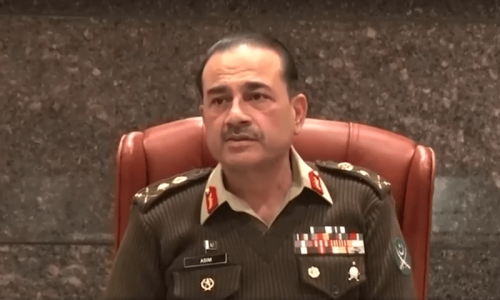
WASHINGTON: The State Department has underscored Pakistan’s centrality to the US as a major ally and partner, after Chief of Army Staff Gen Asim Munir arrived in the US this week.
Gen Munir, who is currently on an extended visit of the US, is expected to hold meetings with key defence, foreign policy and national security officials.
Although the visit was announced by the army’s media wing, details of his engagements have not been disclosed.
Diplomatic sources in Washington, however, said that he was likely to meet the US secretaries of defence and state, as well as the White House national security adviser.
When approached for comment on the Pakistani army chief’s engagements in Washington, a US State Department spokesperson refrained from providing specific details about the visit.
However, they emphasised the enduring relationship between the United States and Pakistan. “Pakistan is a major non-Nato ally and a Nato partner. Generally speaking, we look forward to partnering with them on regional security and defence cooperation,” the spokesperson told Dawn.
Since Gen Munir’s arrival in Washington coincided with an Indian Supreme Court that endorsed India-held Kashmir’s merger with India, many also speculated that the issue could feature in talks he held with US officials.
When questioned about the Indian Supreme Court’s decision, the State Department spokesperson maintained a measured stance. “We continue to follow developments in Jammu and Kashmir closely, noting the Supreme Court’s recent ruling,” they said, talking to Dawn.
The spokesperson, however, declined to speculate on the potential impact of the decision on India-Pakistan relations.
“We look forward to further steps by the Indian government to fulfill its pledges to restore political normalcy in Jammu and Kashmir, including by holding assembly elections as stipulated in the Supreme Court’s ruling,” the spokesperson added.
Separately, at a Monday afternoon news briefing, State Department Spokesperson Matthew Miller responded to questions about two issues that are raised and discussed regularly in US-Pakistan talks: Afghanistan and the political situation in Pakistan.
Responding to the question about Pakistan’s internal politics, Mr Miller emphasised non-interference in the selection of leaders in Pakistan, stating, “The United States does not play any role in choosing the leaders of Pakistan. We engage with the leadership decided by the Pakistani people.” This aligns with Washington’s diplomatic approach, the State Department reiterated.
Addressing the situation between Pakistan and Afghanistan, the spokesperson said: “Obviously, we support a diplomatic resolution to all of the various issues between those two countries.”
Published in Dawn, December 13th, 2023