0
0
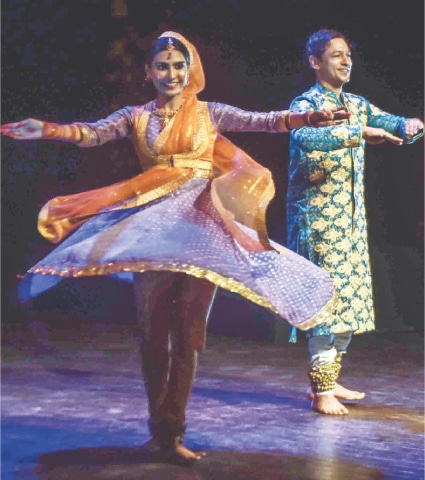
KARACHI: The Tehrik-i-Niswan acknowledged and celebrated the invaluable efforts and contribution of women in promoting art and culture in Pakistan with their latest presentation ‘Herstories’, staged at the Arts Council of Pakistan here on Friday.
Ahead of the presentation, activist, dancer and founder of Tehrik-i-Niswan Sheema Kermani spoke about the real women being featured in the play. “They were women who were talented, who worked hard and struggled and succeeded, too, but were not acknowledged for their work,” she said.
“Still they resisted. Some were also strong and defiant but have been forgotten nonetheless. Therefore, there is only history telling you about the stories of men,” she pointed out.
“But we give you the stories of the women who saw through men, who may have appreciated them for their looks but not for their brains,” she said.
Stories of Atiya Fyzee, Anna Marie Gueizelor, Parveen Qasim and Sara Shagufta shared with audience
Thus, using strong script and dialogues along with graceful dance, began ‘Herstories’.
The first woman remembered was the bold and beautiful Atiya Fyzee, an intellectual and a writer, who hailed from a very educated and enlightened family. Atiya and her sisters Zohra and Nazli didn’t observe the veil. Of the three, Atiya was the most outspoken one, who could speak her mind. And after her younger sister Nazli was married off to a man much older than her, Atiya also spoke against early marriage.
‘Herstories’ also showed the friendship between Atiya and Allama Iqbal that began when the two often met in London and Germany. Then after returning to India, they kept in touch through letters until 1911. In 1912, Atiya married Samuel Fyzee Rahimin, who was Jewish, but then embraced Islam. She later started writing opinion pieces for magazines.
To improve her Urdu, she sought guidance from an older relative, Maulana Shibli Nomani, who passed away in 1914. Then she learned music, too. Together she and her husband were huge collectors of art and music.
Atiya and Fyzee came to Pakistan on Quaid-i-Azam’s invitation. They wanted to set up an art gallery and an institution here for teaching art and music for which the government of Pakistan had given them land where the Arts Council of Pakistan is located presently. But then after the passing away of the Quaid-i-Azam, the couple were driven out of their home here. To make ends meet, they sold their valuables. Fyzee died in 1964 and Atiya three years after that at the age of 90.
The next story was about Anna Marie Gueizelor, better known as Madam Azurie, the daughter of a Jewish German father and an Indian mother. Anna was herself very much into Western ballet until she met Atiya Fyzee, who suggested that she learn Indian classical dance. For this she took on the stage name of Madam Azurie. She found work in Pakistani films, too, but she was not very happy with the standard of films here so travelled around the world with her dance troupe. Then, she hit bad times after General Ziaul Haq banned dance in Pakistan.
Parveen Qasim was another dancer here who was trained in Kathak dance by her father Muhammad Qasim. She also died in misery after Zia’s banning dance.
Mr and Mrs Ghanshyam, who were here from India and had opened the Rhythmic Arts Centre here to teach music and dance to children, also had to run for their life back to India.
These sad tales were followed by perhaps the saddest of all, the story of a poetess, Sara Shagufta, who, after standing up against all the challenges which came her way, finally lost her mind and committed suicide by throwing herself before a train at the Drigh Road Station in Karachi.
The presentation followed an interactive dialogue between a panel of women, including Kermani, artist and writer Rumana Husain, historian Dr Huma Ghaffar and social activist Dr Shahnaz Ahad, and the audience who further delved into why women have been ignored throughout history.
Published in Dawn, December 9th, 2023