A dash of red chilli powder can spice up any dish, literally. Though used globally, it is mainly consumed in Pakistani, Indian and Asian cuisines. Since it makes up a small proportion of the monthly grocery bill, its price, which has been skyrocketing, has gone mostly unnoticed.
The price of 200 grams of red chilli powder has risen nearly 10x over the last decade. The price has doubled over the last year alone, according to the Pakistan Bureau of Statistics.
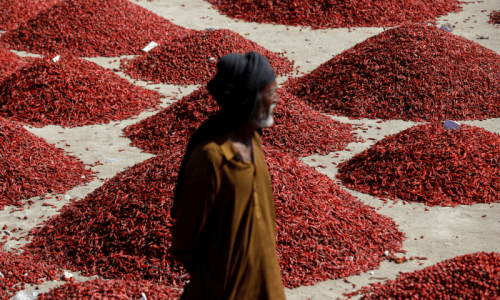
With 150,000 acres of farms producing 143,000 tonnes annually, Pakistan is ranked fourth in world chilli production. Growth in chilli varieties is mostly in Sindh. Kunri, a small town in Umerkot, is known as the red chilli capital of Asia.
However, many years of high temperatures have left chilli farmers struggling to cope.
Last year’s floods wreaked havoc, destroying farms and leaving desiccated, rotten plants. At this time last year, there were only around 2,000 bags of chillis in the market instead of the usual 8,000-10,000 bags in November, according to an article by Reuters.
Food inflation and general economic malaise have contributed to the price hike over the last year. The bumper harvest of Chinese red chillies this year may ease the prices next year.
According to Winrock International, chilli is a high-value cash crop with an average net income of $2,344 per hectare in Pakistan. However, it faces the usual agricultural constraints of a lack of modern irrigation system, an imbalance in the use of fertilisers and pesticides, and a lack of training. Farmers dry red chilli peppers on the open ground, allowing dust to gather and inviting fungus into the crop. Storage in unhygienic conditions, such as dirty, worn-out bags, increases contamination.
Chilli farming is one of the projects under the China-Pakistan Economic Corridor. Chinese companies aim to employ advanced farming methods, cutting-edge research, and improved seeds to cultivate a greater yield of chillies within a reduced area, primarily for export to China.
If successful, this project could pave the way for additional export opportunities for Pakistan. And cheaper red chilli powder for everyday curries.
Published in Dawn, The Business and Finance Weekly, November 27th, 2023