0
0

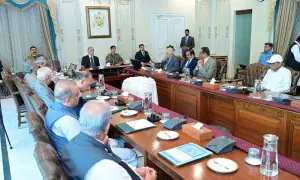
KARACHI: Speakers at an international conference emphasised the need for building regional connectivity through social, economic and political channels.
The two-day conference, South Asia and Regional Connectivity in the 21st Century, organised by Karachi University’s Department of International Relations, was concluded on Wednesday at a local hotel,
In her presentation, Dr Ellinor Zeino highlighted concerns about the radicalisation of Afghan youth, mentioning the recruitment strategies of militant groups posing a threat across ethnicities and raising alarm for neighbouring states.
She urged international engagement with the Taliban to address Afghan grievances, focusing on economic prospects, employment, education, and women’s rights. She also stressed the need for humanitarian aid and transforming the war economy into a trade hub to alleviate the hardships faced by Afghans.
Moot calls for regional connectivity through socioeconomic, political channels
Foreign policy expert Ahmed Rasheed said economic sustainability was important for regional connectivity but Taliban were funding the military and were least concerned about the growth and the development of the civilians and common people.
“Moreover, Taliban economy is more dependent on drugs and illegal trade. They have failed to address the other issues like economy, development, education, and specially women education,” he said, while describing Pakistan’s historical support for Taliban as its biggest mistake.
Rasheed highlighted that the international community had refused to recognise the Taliban due to their alliances with non-state actors and terrorist groups.
Dr Neelum Nigar emphasised regional cooperation on climate change and water security, stressing the importance of treaties to unite states rather than divide them. She emphasised the transboundary nature of climate change as an avenue for regional connectivity.
She addressed regional cooperation on climate change and water security, emphasising the need for states to sign water treaties that united rather than divided rivers. She highlighted the significance of climate change as a unifying factor, stressing that it transcended territorial and political boundaries.
Dr Talat Shabbir discussed the China-Pakistan Economic Corridor (CPEC) as a model for regional connectivity. He emphasised the historical ties between China and Pakistan, underlining CPEC’s achievements in energy production, job creation, and infrastructure development.
He advocated for CPEC’s expansion to connect with Afghanistan, Iraq, Central Asia, and East Asia, highlighting the necessity for political and strategic cooperation to pave the way for economic integration. He stressed the importance of peace in the region as a prerequisite for successful connectivity.
Dr Maliha Zeba Khan focused on Pakistan’s maritime economy and its role in regional connectivity, highlighting the multitude of resources derived from the sea and the potential for trade and commerce. She detailed various connectivity projects in the Indian Ocean and their implications for regional integration.
Dr Mukhit Assanbayev highlighted Afghanistan’s significance as a security dilemma, impacting both regional stability and security.
Published in Dawn, November 24th, 2023