AS elections approach, there is some talk of ‘revisiting’ the 18th Constitutional Amendment as well as the NFC award formula. It had been reported in this paper that the PML-N was considering alterations to the 18th Amendment, though the party later claimed no such moves were afoot.
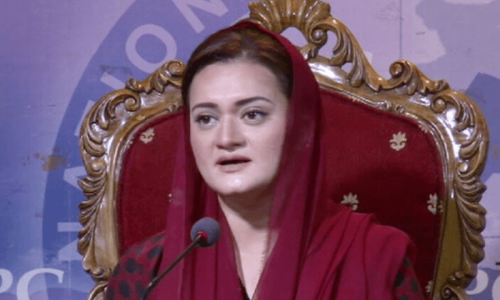
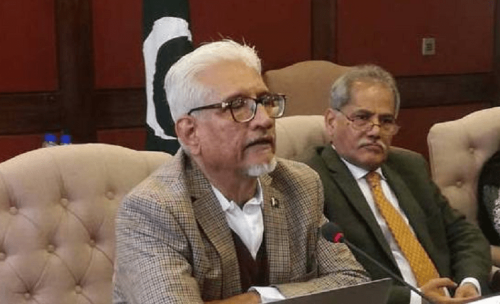
In a related development, the prime minister’s adviser on finance, while speaking at an event on Monday, said that the current NFC award formula needed to be revisited as it had “held us back”.
Both these issues — the 18th Amendment and the NFC award — are interlinked and concern centre-province relations. This is not the first time such observations have been made; during the PTI’s rule the then prime minister Imran Khan had made similar comments.
The fact is that powerful elements within the establishment and bureaucracy favour a strong centre and do not want the greater devolution the 18th Amendment envisages. However, any rollback of devolution would entail disastrous consequences, foremost of which would be a clash between the provinces and the centre.
Neither the 18th Amendment nor the NFC award is scripture, and can, indeed, be altered. But it is not the job of the caretaker administration to suggest or implement changes that would affect the very structure of the federation.
The 18th Amendment, passed in 2010, was adopted by consensus after lengthy deliberations. It restored the federal structure of the 1973 Constitution that had been disfigured by successive dictators, and fulfilled a long-standing demand for provincial empowerment.
Therefore, any changes to this law, as well as the NFC formula, can only be carried out by an elected parliament after thorough discussion, and with the agreement of all federating units.
The rationale presented by forces that advocate for increased centralisation is that devolution leaves the centre without adequate finances. This assertion is debatable, for the reason behind Pakistan’s financial woes is not devolution, but our financial mismanagement and profligate ways.
Nevertheless, there is some substance to the claim that the provinces have failed to deliver. This is certainly the case with post-devolution administrations in Sindh and Balochistan, where indicators such as health and education remain unimpressive. But the answer lies in more capacity-building for the provinces and greater fiscal transparency, and not in rolling back devolution.
In fact, for the true fruits of devolution to reach the people, all provinces should politically and financially empower their respective elected local governments. It should be remembered that Pakistan was created by its federating units, and pro-centralisation tendencies, such as the One Unit scheme, have only hurt the federation.
When the next parliament is elected it can discuss ways to improve the 18th Amendment and the NFC award. Bulldozing ‘solutions’ without democratic input will only damage interprovincial relations.
Published in Dawn, November 22th, 2023