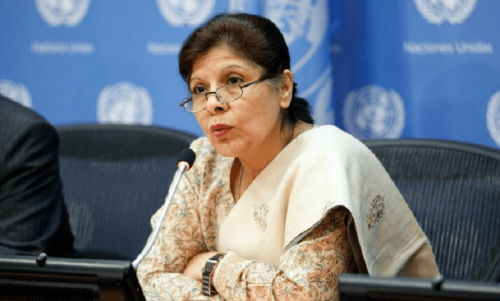
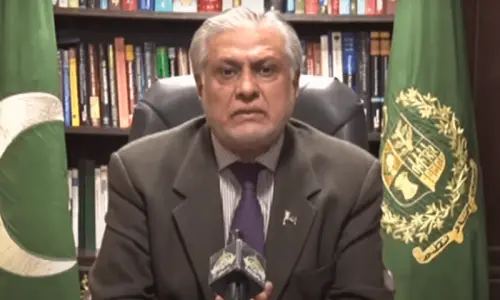
KARACHI: Finance Minister Dr Shamshad Akhtar said on Thursday the government will separate the customs from the revenue collection mechanism as part of the reforms in the Federal Board of Revenue (FBR).
Speaking on the second day of the Future Summit organised jointly by Habib Bank Ltd and Nutshell Group, Dr Akhtar said the role of the customs will now be limited to “tracking” smuggling while the revenue collection will remain the FBR’s mandate.
Operating within the FBR, the customs’ role is to collect taxes on international trade while stopping the cross-border movement of contraband goods. Its share in the FBR’s total tax collection — which also includes income tax, sales tax and federal excise duties — is usually less than 15 per cent.
“This is a part of the restructuring of the FBR,” she said, adding that a notification to this effect will be issued next week. “There’ll be more notifications coming out on the restructuring of the FBR,” she said.
Shamshad says it will only be ‘tracking’ smuggling
In addition, the government is working towards the separation of the tax policy and revenue division — a move aimed at removing the apparent conflict of interest in tax collection, she said.
Like her many predecessors at the helm of the finance ministry, Dr Akhtar spoke forcefully against the National Finance Commission (NFC) award, which resulted in the transfer of a disproportionately high share of government revenues from the centre to the provinces more than a decade ago.
“We devolved hastily a lot of subjects but also gave away a lot of the share of revenue to the provinces,” she said while referring to the formula notified in 2010 for distributing national funds between Islamabad and the provinces as well as among the provinces.
The award increased the share of the provinces in the divisible pool — which consists of income and corporate tax, sales tax on goods, and excise and import duties collected by the federal government — to 57.5pc from 47.5pc while reducing the share of the federal government by 10 percentage points to 42.5pc.
Calling the move a mistake, she said reversing course in a “political setup” is not an easy thing to do. The caretaker government can’t introduce a new devolution mechanism, but it has agreed with the provinces that the federal government will transfer the provincial components of expenditure back to the provinces.
“The federal government will take its responsibility and the provinces will take theirs. There’ll be some time lag in this process,” she said.
Dr Akhtar also sang the praises of the public-private partnership model, which has gained traction, especially in Sindh where the government is building large-scale projects like roads and bridges through private funding.
Even though a favourite of global financial institutions like the World Bank, the PPP model has often received criticism for letting for-profit entities benefit from tax concessions and protection from liability in projects involving self-dealing and rent-seeking.
The PPP model has “done wonders” for Sindh in this area, she said. “This will help raise sizable savings in budgetary resources for both federal and provincial governments,” she added.
Published in Dawn, November 17th, 2023