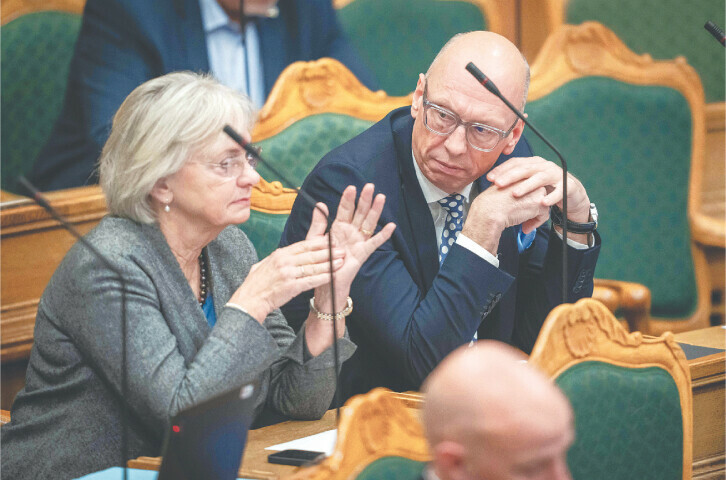
COPENHAGEN: Denmark’s parliament debated a bill to ban desecration of the Holy Quran on Tuesday, after a string of sacrilegious acts sparked anger in Muslim countries earlier this year.
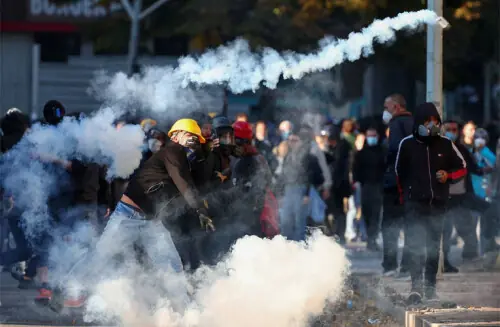
Nearly 1,000 protesters attempted to march to the Danish embassy in Baghdad’s fortified Green Zone in late July, following a call by firebrand cleric Moqtada Sadr.
Denmark’s government said the tensions posed a threat to national security.
The bill proposes to make it a criminal offence to “publicly or with the intention of dissemination in a wider circle to treat a text with strong religious significance for a religious community… inappropriately,” according to a summary on the parliament’s website.
Offenders could face up to two years in prison.
Initially announced at the end of August, the bill was amended following criticism that its first draft limited freedom of expression and would be difficult to enforce.
“The bill has been narrowed to specifically target improper treatment of scriptures of significant religious importance,” the justice ministry said in a statement last month.
The bill was originally planned to cover objects of significant religious importance.
The first draft of the bill was criticised by some — including politicians, artists, media and freedom of speech experts — who saw it as a return to a blasphemy law that Denmark abolished in 2017.
Police and judicial officials also feared it would be difficult to enforce.
“With the changes we are now proposing, the law will be easier to navigate — including for the police and the courts,” Justice Minister Peter Hummelgaard said last month, noting that the “terrorist threat” against Denmark had intensified.
The new legislation would be included in the section of the country’s penal code that covers national security.
After the first reading on Tuesday, the bill must be studied by a committee and then submitted for two further readings before a vote.
Published in Dawn, November 15th, 2023