Sindh to send illegal immigrants back to Afghanistan by train

KARACHI: The deportation of illegal immigrants from Sindh was suspended for one day on Tuesday after the government decided to send them back to their country by train, instead of buses.
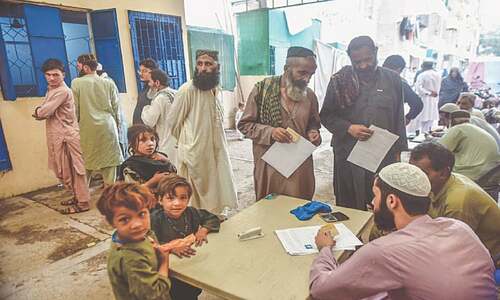
South-DIG Syed Asad Raza told Dawn that around 80 illegal Afghan immigrants were brought to Afghan transit centres established in Sultanabad, but they could not be sent to the Chaman border crossing through buses on Tuesday.
The decision to deport them in large numbers by trains was taken in a meeting held between railways officials, the Karachi commissioner, the DIG-South and other authorities.
The DIG said it was decided in the meeting that a total of 760 immigrants would be sent to Balochistan by train on Wednesday (today).
He said that a special train would be sent to the Chaman border in the evening and all deputy commissioners and SSPs in Karachi had been directed to send at least 800 illegal immigrants to the transit centres till Wednesday afternoon for verification before their onward journey to Afghanistan.
With more than 700 undocumented Afghan immigrants, first train to leave Karachi for Balochistan today
The senior officer, who looked after the transit centres, said that so far only 450 illegal immigrants had been sent to their home country from Sindh via buses since Nov 1 when a countrywide crackdown was launched for repatriation of undocumented foreigners.
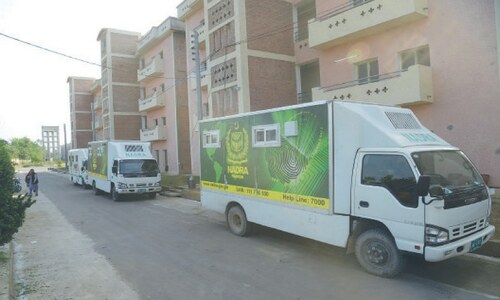
He said that the National Database and Registration Authority (Nadra) had provided mobile vans, which had expedited the work of verification of foreigners.
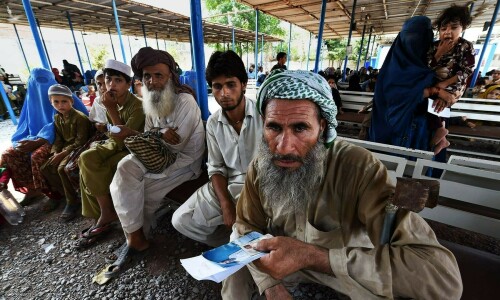
Meanwhile, sources said that at a high-level meeting held in Islamabad on Tuesday, the Sindh home secretary informed the participants that most of foreigners brought to the transit points were in possession of some documents like Proof of Registration Card (PoR) or Afghan Citizen Card (ACC) and screening of their identity documents was time-consuming.
He proposed that Nadra should be asked to provide quick and on-spot verification facility so that no doubt would remain regarding the identity and status of persons brought to the transit points.
It was also decided in the meeting that data of ‘fake’ computerised national identity cards shall be shared with provinces in consultation with all stakeholders.
The sources said that it was pointed out in the meeting that the pace of repatriation had slowed down because of ‘certain factors’ and underlined the importance of addressing them.
It was decided that the schedule of transporting deportees to crossing points shall be held in ‘abeyance’ and the provincial governments would deport illegal foreigners on a daily basis subject to prior clearance from Balochistan and Khyber Pakhtunkhwa for provision of security and border clearance.
The meeting was informed that the stated number of illegal foreigners appeared to be estimated on the ‘higher side’, which was ‘creating problems’ in mapping and related efforts and energy was wasted.
Published in Dawn, November 8th, 2023