Smog-ridden New Delhi extends schools shutdown till Nov 10



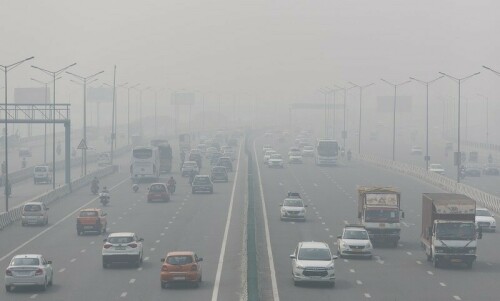
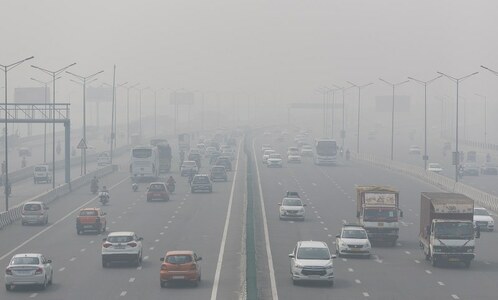
Authorities in the smog-ridden Indian capital New Delhi on Sunday extended an emergency school closure by a week, with no signs of improvement in the megacity’s choking levels of pollution.
Every autumn New Delhi is blanketed in acrid smog, primarily blamed on stubble burning by farmers in the neighbouring agrarian states.
The city is regularly ranked as one of the most polluted on the planet, with its annual smog blamed for hundreds of thousands of premature deaths each year.
“As pollution levels continue to remain high, primary schools in Delhi will stay closed till 10th November,” Delhi state’s education minister Atishi posted on X, formerly known as Twitter.
Secondary schools “are being given the option of shifting to online classes”, added Atishi, who uses only one name, after days of high pollution levels.
The Indian capital — which has a population of 30 million — once again ranked as the world’s most polluted city Sunday, according to monitoring firm IQAir.
Delhi state annually imposes restrictions on construction activities and orders some vehicles off roads when pollution reaches severe levels.
But critics say that governments wilfully ignore the agricultural primary source of the public health crisis.
The farmers in neighbouring states are a powerful electoral lobby and elected leaders have long resisted calls to impose strict fines and other punitive measures on them for their actions.
New Delhi is set to host a cricket World Cup match on Monday between Sri Lanka and Bangladesh.
But both teams cancelled their scheduled pre-match training sessions in recent days over health risks from the smog.
Severe smog levels are expected to persist for several more weeks.
Levels of the most dangerous PM2.5 particles — so tiny they can enter the bloodstream — reached 570 micrograms per cubic metre on Sunday according to IQAir, nearly 40 times the daily maximum recommended by the World Health Organisation.
A Lancet study in 2020 attributed 1.67 million deaths to air pollution in India during the previous year, including almost 17,500 in the capital.
And the average city resident could die nearly 12 years earlier than expected due to air pollution, according to an August report by the University of Chicago’s Energy Policy Institute.
India is heavily reliant on polluting coal for energy generation, resisting calls to phase it out, and its per capita coal emissions have risen 29 per cent in the past seven years.