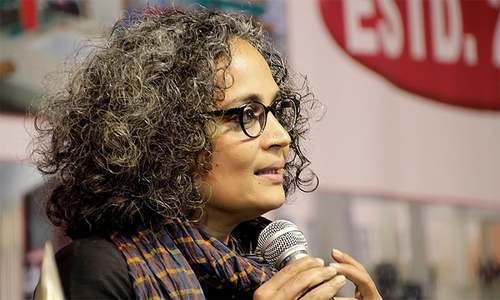
Booker Prize-winning Indian novelist Arundhati Roy could be prosecuted for a 2010 speech about held-Kashmir after a top official signed off on the move, Indian media reported on Tuesday.
Roy, 61, is one of India’s most famous living authors, but her writing and activism, including her trenchant criticism of Prime Minister Narendra Modi’s government, has made her a polarising figure at home.
A criminal complaint accusing her and several others of sedition had languished in India’s notoriously glacial criminal justice system since it was first filed in 2010.
But on Tuesday, Indian media reported that V.K. Saxena, the top official in the administration governing New Delhi, had given approval for the case to proceed before the courts.
Saxena’s directive said there was enough evidence for a case to proceed against Roy and her codefendants “for their speeches at a public function” in the capital, The Hindu newspaper reported.
The original complaint accuses Roy and others of giving speeches advocating the secession of occupied Kashmir from India.
Held-Kashmir is one of the most sensitive topics of public discussion in India, which has fought two wars and countless skirmishes with Pakistan over control of the territory.
Tens of thousands of people, including Indian troops, militants and civilians, have been killed in the valley since an insurgency against Indian rule broke out in 1989.
Roy’s home in New Delhi was besieged by protesters in 2010 when her remarks from the panel discussion became public.
Two of her co-defendants have died in the 13 years since the case was first lodged.
Roy became the first non-expatriate Indian to win the prestigious Booker Prize for her acclaimed debut novel “The God of Small Things” in 1997.
She is also known for her passionate essays on the plight of the poor and dispossessed in India, occasionally earning the ire of the country’s elite.
In recent years her work has marked her as one of the most high-profile critics of Modi’s government, which has been accused by rights groups and others of targeting activists for criminal prosecution and working to suppress free speech.
Reporters Without Borders warns “press freedom is in crisis” in India.
Since 2014, India dropped from 140 to 161 on its rankings of media freedom, including 11 places since last year.