0
0


STOCKHOLM: Norway’s Jon Fosse, whose plays are among the most widely staged of any contemporary playwright in the world, won the Nobel Prize in Literature on Thursday.
Sometimes compared to Samuel Beckett, another Nobel-winning playwright, Fosse’s work is minimalistic, relying on simple language which delivers its message through rhythm, melody and silence.
The Swedish Academy said the 64-year-old was honoured “for his innovative plays and prose which give voice to the unsayable.” Fosse’s writing is defined more by form than content, where what is not said is often more revealing than what is.
“Fosse presents everyday situations that are instantly recognisable in our own lives. His radical reduction of language and dramatic action expresses the most powerful human emotions of anxiety and powerlessness in the simplest terms,” the jury said.
“I am overwhelmed and grateful. I see this as an award to the literature that first and foremost aims to be literature, without other considerations,” Fosse said in a statement.
Speaking to Norwegian public broadcaster NRK, he said he was “surprised but also not”, after his name had been mentioned in Nobel speculation for several years.
“While he is today one of the most widely performed playwrights in the world, he has also become increasingly recognised for his prose,” the jury said.
Fosse’s oeuvre, written in Nynorsk — a written form of Norwegian used by 10 per cent of the population — spans a variety of genres and consists of plays, novels, poetry collections, essays, children’s books and translations.
The chairman of the Nobel committee, Anders Olsson, told reporters Fosse had come to be regarded as an innovator through his “ability to evoke man’s loss of orientation, and how this paradoxically can provide access to a deeper experience, close to divinity”.
His major works include Boathouse (1989), which was well-received by critics, and Melancholy I and II (1995-1996).
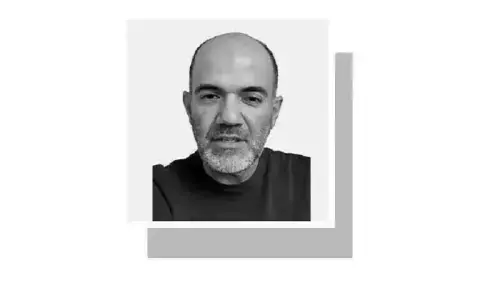
Born among the fjords of western Norway, Fosse is usually seen clad in black with a few days’ stubble. He grew up in a family which followed a strict form of Lutheranism and rebelled by playing in a band and declaring himself an atheist. He ended up converting to Catholicism in 2013.
After studying literature, he made his debut in 1983 with the novel Red, Black which moves back and forth in time and between perspectives.
His latest book, Septology, a semi-autobiographical magnum opus — seven parts spread across three volumes about a man who meets another version of himself — runs to 1,250 pages without a single full stop. The third volume was shortlisted for the 2022 International Booker Prize.
Struggling to make ends meet as an author in the early 1990s, Fosse was asked to write the start of a play.
Published in Dawn, October 6th, 2023