Social protection through the lens of digitisation


 0
0


MANILA: If we have learnt one lesson from the Covid-19 pandemic, it is that the world must “find ways to preempt pestilence and natural disasters” as more are to be fought, Poverty Alleviation Secretary Yusuf Khan said on Tuesday.
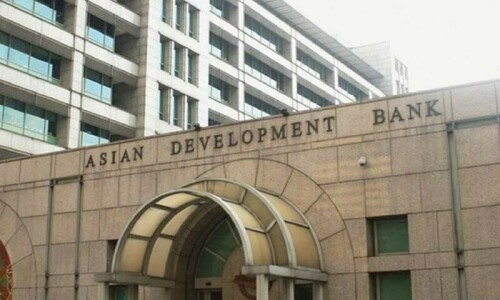
He was speaking at a discussion held as part of Asia-Pacific Social Protection Week, organised by the Asian Development Bank (ADB).
But it is not just Covid-19; the world has had to face other challenges — the Russian invasion of Ukraine, the economic down-turn with rising fuel and food prices, earthquakes and climate-related disasters like hurricanes, floods, forest fires and droughts — that have reinforced vulnerabilities and weakened the resilience of the people.
It has plunged 162 million newly poor people to the pool of already poor, which in 2017 was already more than 200 million, most of them in South Asia.
But through all these, as pointed out by Fatima Yasmin, vice president for Sectors and Themes at the ADB, social protection has emerged as a vital instrument to prop up not just livelihoods but lives.
“Social protection also has immense potential to contribute to climate change action and to support achieving a just transition to more sustainable and green economies,” she told the audience.
But with so much chaos, it means finding newer and out-of-the-box ways of protecting not just the vulnerable and the marginalized but also a rapidly ageing population. By 2050 there will be 1.3 billion people or one in four person over the age of 60.
For Rex Gatchalan, social welfare and development secretary for the Philippines, digitisation is the key. Poverty can be humiliating, especially when one has to stand in line to wait for cash dole outs.
“We need to go online rather than in line,” he said, adding that his country wanted to ensure that all financial assistance programmes become digital and to do away with physical vouchers and cash.“
Digitisation has also helped Pakistan with its social protection programme — the Benzair Income Support Programme.
Talking to Dawn, Secretary Khan explained that in the past, the programme updated its national socio-economic registry by carrying out an expensive and periodic house-to-house census.
“This collected information remained static till [the exercise] was repeated, often after a lapse of many years. Now, instead of going house-to-house collecting information, the beneficiaries are requested to come to their nearest BISP office and get their details revalidated, every three years.”
Or, in case there is death or birth in the family, they can immediately report that and get their poverty score adjusted. If any disaster has struck in their district, they can report their changed socio-economic situation.
“This process has eliminated the need for an expensive, house-to-house carpet sweep of the entire country, and the data remains dynamic and responsive to changes being reported by the people themselves,” he said.
Published in Dawn, September 27th, 2023