Egypt’s ban on veil in schools sparks debate on social media



CAIRO: A ban on wearing the face veil in Egyptian schools announced by the government this week sparked debate on social media on Tuesday with critics condemning it as “tyrannical”.
The education ministry decision, announced in the state-run newspaper Akhbar al-Youm on Monday, applies to both state and independent schools.
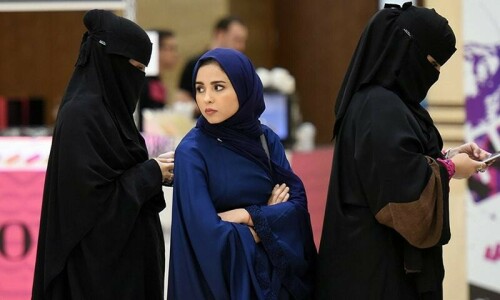
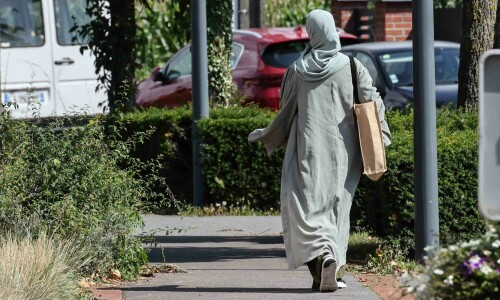
It bans the niqab, an all-encompassing black garment that leaves only the eyes visible and is worn by a small minority of Egyptian women. The decision leaves optional the hijab, the headscarf worn by a much larger number of women.
The choice must be made according to the “wishes of the pupil, without pressure or coercion from any party except her legal guardian, who must be informed of the choice,” the decree said.
Critics took to social media to lambast the move, accusing the government of meddling in private matters.
“People are angry because the government gave no justification. It’s a tyrannical decision that impinges on people’s private lives,” a user going by the name Mohammed posted on X, formerly known as Twitter.
Supporters retorted that only an extremist minority would be affected.
“Nobody is angry except supporters of the Taliban and the Islamic State group,” posted a user calling himself “al-Masri” (the Egyptian).
Talk show host Ahmed Moussa, a fervent supporter of the anti-Islamist administration of President Abdel Fattah al-Sisi, welcomed a “first significant step towards the destruction of extremism and the correction of an education system that had become the haunt of Muslim Brotherhood terrorist groups”.
Sisi was still army chief when in 2013 he overthrew the democratically elected Islamist President Mohamed Morsi, the Muslim Brotherhood leader. The group has since then been outlawed as a “terrorist organisation”, with hundreds of its members killed and tens of thousands thrown in jail.
Other posts questioned the government’s priorities.
“Is the niqab to blame for the overcrowded classes, the old furniture and the difficulties faced by teachers?” one post asked.
In 2015, Cairo University banned its teachers from wearing the niqab, in a decision upheld by an administrative court in 2020.
Published in Dawn, September 13th, 2023