TOBA TEK SINGH: Provincial Minister for Agriculture, Energy, Industries, Commerce, Investment and Skill Development SM Tanveer said on Tuesday that the government is devising a strategy to boost citrus production in line with international standards.
This strategy will also address issues related to seed quality, nursery management, disease control, and pest management, all aimed at satisfying local demands and generating foreign exchange.
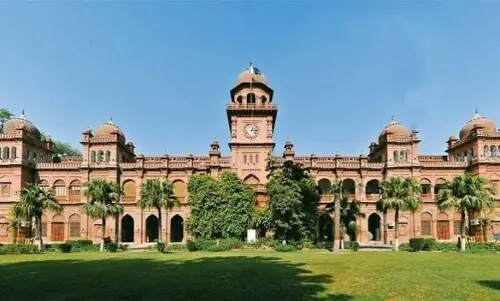
Mr Tanveer said this during a meeting on citrus at the University of Agriculture of Faisalabad (UAF). He said that sustainable agricultural development is the government’s foremost priority.
He said the formation of the Citrus Action Plan Committee, led by UAF VC Prof Dr Iqrar Ahmad Khan, would tackle citrus-related challenges. He said the collaborative efforts among agricultural experts, academia, industry, and policymakers can ensure food security. He said agricultural institutions were meeting the ever-growing population’s agricultural needs.
He said the prosperity and poverty alleviation of our country were directly linked to the agricultural sector.
Dr Iqrar said Pakistan’s citrus production was 10.2 tonnes per hectare in 1970 and has risen to 11.6 tonnes per hectare in 2021. In comparison, China’s citrus production was 2.29 tonnes per hectare in 1970 and reached 15.3 tonnes per hectare in 2021, while Brazil’s production was 15 tonnes per hectare in 1970 and 27.1 tonnes per hectare in 2021.
He stressed the need for promoting low-seed citrus varieties, which were in demand internationally. He also said the UAF had developed a modern nursery mechanism through industry-public partnership and called for the expansion of existing and new citrus germplasm to extend the harvest window.
He highlighted the collaborative project on citrus psyllids between UAF and the University of California, USA, for psyllid management, led by Dr Mark Hoodie and Dr Jalal Arif.
He said efforts should be made to rehabilitate and rejuvenate existing orchards, as many of them suffer from malnutrition and micronutrient deficiencies. He said he absence of regular soil, water, and leaf analysis in orchards made a basis for nutrient application and highlighted the common practice of faulty intercropping, especially fodder cultivation.
Published in Dawn, September 6th, 2023