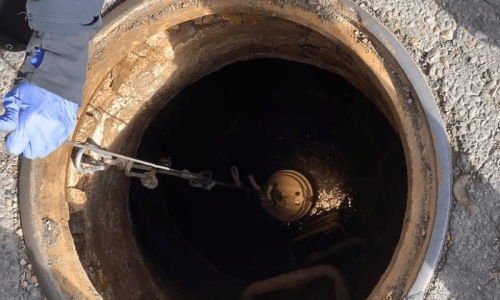
IN the recent past, Karachi has experienced several unfortunate, infrastructure-related accidents that impacted human lives and assets. The list is long: nine people were injured in a sewer gas explosion in Lasbela. Its intensity caused panic among residents and passersby, who thought a bomb had gone off. A man died when a signboard fell on him in Nazimabad. Uncovered sewers have taken scores of lives, including those of two siblings, who fell to their death through a manhole in Malir.
Other common infrastructure hazards include electrocution, especially during the monsoons. Fires at various premises are regular occurrences, often ignited by faulty electric fixtures, wiring and devices. Not too long ago, malfunctioning oil pipes caused an oil spill in Korangi.
Traffic accidents pose a constant and common danger to ordinary folk and broken infrastructure, such as dilapidated pedestrian bridges without handrails and balustrades, is a hazard for pedestrians, especially women and children. At the other end, there has been an unceasing rise in Karachi’s street crime, and the media is rife with clips of mugging and theft. A most unexpected passerby in the city was a big cat on Sharea Faisal; it evaded capture for many hours in the haphazard infrastructure of the metropolis.
Whenever one has brought the grave realities of a fractured infrastructure and poor urban governance to the notice of the city and provincial leadership, investment figures set aside for mega projects have been rattled off. Take the much-trumpeted ‘safe city’ project; five years on, there is negligible progress. Media reports say it overshot the original spending target and has exceeded Rs40 billion, perhaps higher than the Karachi Metropolitan Corporation’s annual budget. Also, how the mere installation of CCTV cameras will ensure safety for pedestrians and passengers is unclear, as merging this network with law-enforcement agencies and their response teams requires detailed, foolproof planning.
The Karachi BRT is a classic example of wasteful expenditure.
Another multibillion-rupee project, S-III, is also ongoing. It aims to take the bulk of wastewater to treatment plants, for purified water to be released into the environment. But wastewater management in Karachi has many dimensions — storm water drains and nullahs have become secondary, with tertiary sewers with wastewater being randomly disposed in these conduits, and unregulated development with scarce application of planning and engineering wisdom resulting in sewage flowing into lanes and streets across the city.
Moreover, when unplanned construction covers wastewater conduits, it traps harmful gases, and their accumulation leads to explosions. Therefore, mapping the existing wastewater disposal situation, identifying bottlenecks and other snags, population projections and redevelopment of sewers are some of the more common remedies for the entire city.
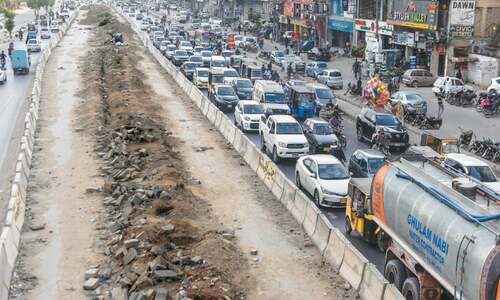
Many central corridors of movement are dug up for the BRT corridor. On University Road, mighty cranes are at work with dubious safety measures, and often workers are seen waving red flags at motorists, but an alternative plan for travel is absent. Billions of rupees have been spent on subsidy-driven transportation initiatives. The Karachi BRT is a classic example of wasteful expenditure of public funds. It is estimated that if and when all seven BRT corridors operate, they will not carry more than nine per cent of the total passenger load.
The adjustments for these are already creating congestion, as many lanes of movement will be lost to make way for BRT buses. There is a plethora of new institutions to manage the BRT at the federal and provincial levels, with huge administrative costs. In these times of grave economic crises, exacerbated by World Bank and ADB loans, one is forced to question the technical and financial merits of exorbitant projects, with minimal benefits to the commuters.
Karachi’s populace deserves better. Our civic institutions, land management agencies and utility organisations require enormous reforms so that they are able to resolve contemporary challenges. It will be prudent to include independent and experienced experts in governing bodies and management boards.
For instance, while there is a provision for an oversight committee in the building control authority, since its creation in 1979, this committee has rarely been notified. When active, it provided objective appraisals of building control activities that led to many useful procedural reforms. It requires firm will on the part of governments to create such oversight entities in order to avert a collapse of governance, glimpses of which are commonly observed in our civic affairs.
The writer is an academic and researcher based in Karachi.
Published in Dawn, September 4th, 2023