BRICS nations agree to expand developing world bloc


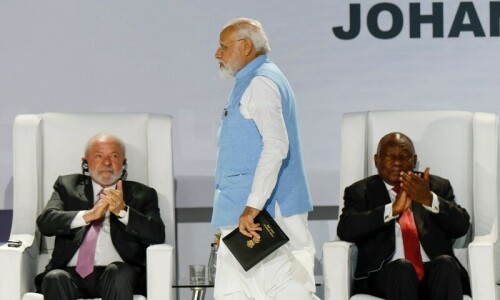
Leaders of the BRICS bloc of leading developing countries have agreed to mechanisms for considering new members, South Africa said on Wednesday, paving the way for dozens of interested nations to join the group which has pledged to champion the “Global South”.
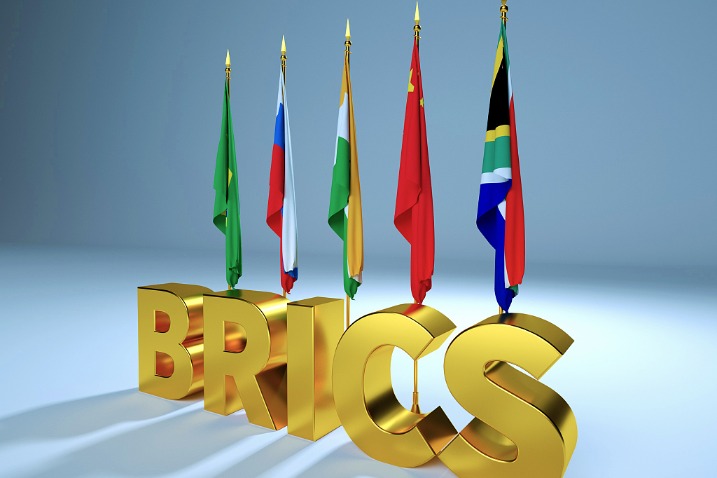
Agreement on expansion could help lend global clout to BRICS — Brazil, Russia, India, China and South Africa — at a time when geopolitical polarisation is spurring efforts by Beijing and Moscow to forge it into a viable counterweight to the West.
“We have agreed on the matter of expansion,” South Africa’s foreign minister Naledi Pandor said on Ubuntu Radio, a station run by her ministry, following a meeting by BRICS leaders at a three-day summit in South Africa.
“We have a document that we’ve adopted which sets out guidelines and principles, processes for considering countries that wish to become members of BRICS … That’s very positive.”
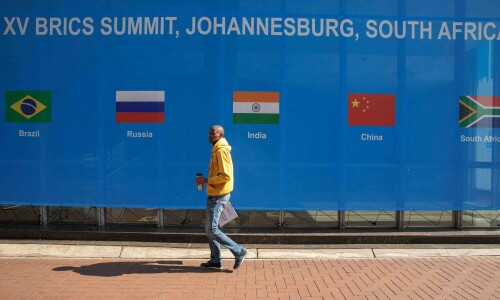
Enlarging BRICS has topped the agenda at the summit taking place in Johannesburg. While all BRICS members had publicly expressed support for growing the bloc, there had been divisions among the leaders over how much and how quickly.
Its member countries also have economies that are vastly different in scale and governments that often seem to have few foreign policy goals in common, complicating its consensus-driven decision-making.
China’s economy, for example, is more than 40 times larger than South Africa’s, Africa’s most developed country.
Pandor did not give details of the framework of criteria for considering candidates, simply saying that the bloc’s leaders would make an announcement on expansion before the summit concludes on Thursday.
Champion of the developing world
More than 40 countries have expressed interest in joining BRICS, say South African officials, and 22 have formally asked to be admitted.
They represent a disparate pool of potential candidates — from Iran to Argentina — motivated largely by a desire to level a global playing field many consider rigged against them and attracted by BRICS’ promise to rebalance the global order.
“The world is undergoing major shifts, division and regrouping … it has entered a new period of turbulence and transformation,” said China’s President Xi Jinping, who has long pushed for the expansion of the BRICS group.
“Development is an inalienable right of all countries. It is not a privilege reserved for a few,” he told the summit earlier on Wednesday.
Though home to about 40 per cent of the world’s population and a quarter of global GDP, the bloc’s ambitions of becoming a global political and economic player have long been thwarted by internal divisions and a lack of coherent vision.
Russia, isolated by the United States and Europe over its invasion of Ukraine, is keen to show Western powers it still has friends.
Brazil and India, in contrast, have both forged closer ties with the West.
Brazil’s President Luiz Inacio Lula da Silva on Tuesday rejected the idea the bloc should seek to rival the United States and the Group of Seven wealthy economies.
Moves to expand the bloc and push its New Development Bank as an alternative to established multilateral lenders are, however, raising some concern in the West.
Werner Hoyer, the head of European Investment Bank, warned the West on Wednesday it was in danger of losing confidence of the “Global South” unless it urgently intensified its own support efforts for poorer countries.