0
0

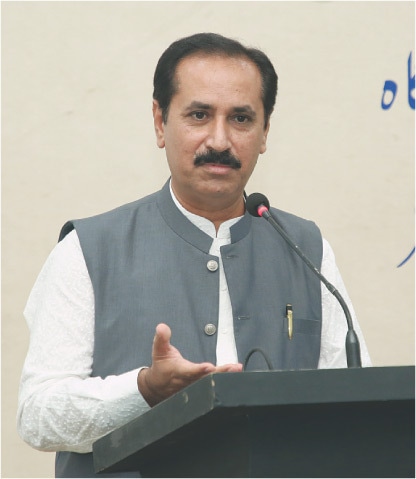
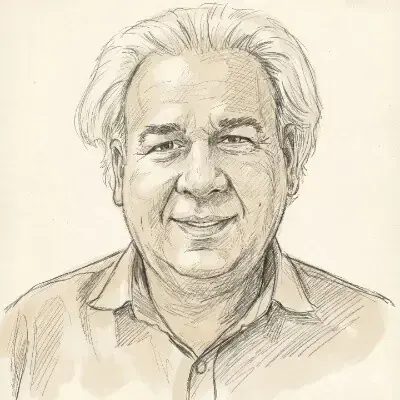
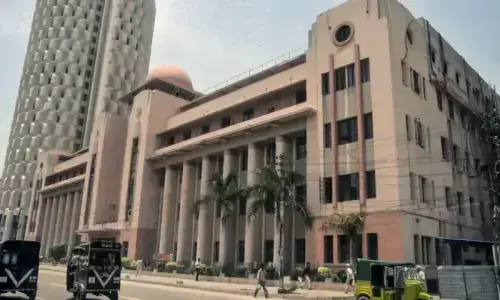
KARACHI: Eminent critic Nasir Abbas Nayyar delivered a lecture on ‘Ismat Chughtai — The First Rebel in Urdu Fiction’ at the Arts Council of Pakistan on Saturday evening.
The topic that the council had chosen required a fair bit of deliberation before finalising, which in a manner of speaking was reflected in the talk given by Nayyar because a fair bit of the last set of his arguments focused on how Ismat placed ‘home’ (ghar) at the centre of her stories. Another point in that connection is that the critic in the beginning mentioned Rashid Jahan (one of the contributors to the collection of short stories Angarey that created quite a stir in pre-partition India) as her predecessor in the same league. Also, the fact that most of Ismat’s literary influences were male figures from the west made one scratch one’s head. If so much was treated as a ‘given’, then why call Ismat the ‘first’ rebel?
Back to the lecture. Nayyar said Ismat was born into a middle-class family in UP, undivided India. Her father was an honest man because of which he couldn’t earn much. Ismat was the 10th child of her parents who had 12 children, two of whom died. Ismat’s mother used to say to her why she [Ismat] didn’t die with the other two. It was her mother who first looked down upon her. This experience played a significant role in the writer’s life. She could have chosen the path where she would constantly crib about her fate, instead she developed a certain courage that took her ahead. When she passed her matriculation exam, her father told her not to study further. Since she knew that economic liberty was pivotal for women, she told her father that if he didn’t allow her to study more, she’d join a missionary school. It convinced him and she went ahead with her studies.
The critic said initially Ismat was aided by her father and then by her brother Azim Beg Chughtai on her road to rebellion. In 1932, two books were published; both had a major impact on Ismat’s life and work. The first was a collection of short stories Angarey and the second was her brother’s Hadees Aur Pardah in which the author had claimed that it’s not mandatory for women to cover their faces. She was aware of the fact that in order to give power back to women, that particular realisation was important.
Nayyar then highlighted the role of Rashid Jahan in Ismat’s life and the book Angarey containing Jahan’s story. Ismat had once enthused she loved Rashid Jahan so much that she could eat her alive. At the time, there were two kinds of women writers. The first ones were those who acquired modern education, and the other group was the one which despite getting modern education wanted women to be the master of their fate within the confines of their houses. “Ismat’s rebellion was of a woman that stepped outside the house, played her role and without the support and permission of men.”
At that point the scholar underlining rebellion’s synonyms — disobedience — mentioned Eric Fromm’s essay Disobedience as a Psychological and Moral Problem published in 1963 in which he argues that society would self-destruct without achieving freedom through disobedience. The German author urged to look at history with a different angle, not through the prism of obedience and acquiescence. Fromm thinks human history begins with a disobedient act.
After that Nayyar shed light on Ismat’s writing as rebellious pieces through short stories such as Lihaaf and pen sketches such as Dozakhi.
Poet Zehra Nigah presided over the event. She spoke about her personal association with Ismat and about some of her stories.
Arts Council president Ahmed Shah informed the audience on his future plans. Ambreen Hasib Amber moderated the programme.
Published in Dawn, August 21st, 2023