AS the nation enters a period of political transition, there is a critical need to stay focused on counterterrorism measures. This is particularly true for the militancy-hit parts of KP and Balochistan, where security forces regularly continue to face off against militants.
Two incidents on Sunday in the two provinces illustrate the varied nature of the threat. In Gwadar, calamity was narrowly averted when security personnel confronted terrorists belonging to the banned Baloch Liberation Army. The ISPR says two terrorists were killed as they attacked a convoy transporting Chinese workers in the port city. Luckily, the foreigners were travelling in bulletproof vehicles.
The Chinese consulate in Karachi has called upon the state to “severely punish the perpetrators and take concrete … measures” to protect Chinese citizens and projects. In the other incident, a soldier was martyred while four TTP terrorists were killed in a gun battle in Bajaur.
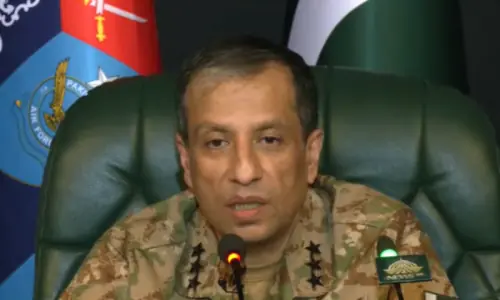
The top brass is seemingly aware of the delicate situation. While addressing the Independence Day parade at Kakul, the army chief thanked the people of KP and Balochistan for “resiliently fighting … terrorism”, while he urged Afghanistan to prevent its soil from being used against Pakistan.
Yet the battle against militancy cannot be an open-ended exercise, as people living in the affected regions have had enough of violence, and are demanding the state take decisive action.
In this regard, a rally was held on Saturday under the aegis of the Bara Siasi Ittehad in Khyber district. The event, which saw heavy participation from the public, was supported by political parties from across the ideological spectrum. The main demands of the rally participants were peace in their region, and an end to violence, extortion and militancy. This is only the latest of well-attended rallies in KP that have echoed similar demands.
Whether it is TTP, IS-K or separatist militants, an effective counterterrorism strategy is needed to calm the affected regions, dislodge the terrorists and cause minimum disruptions in the lives of the local people, who have sacrificed much over the past several years and seen numerous counter-insurgency operations.
Within Pakistan there can be no safe havens for militants, their sympathisers or facilitators. Moreover, the state must continue working with the Afghan Taliban to ensure no anti-Pakistan militants find sanctuary across the western border. Efforts to address Pakistan’s concerns on this front may have continued since the Taliban took Kabul in 2021, but have yielded mixed results.
Sometimes there is talk of cooperation, at other times much acrimony. For example, the Taliban spokesman recently criticised Pakistan for being unable to address the militancy issue. Instead of trading blame, both sides should work to ensure militants do not have the space to operate, with the onus on Kabul to prevent anti-Pakistan terrorists from launching attacks.
Published in Dawn, August 15th, 2023