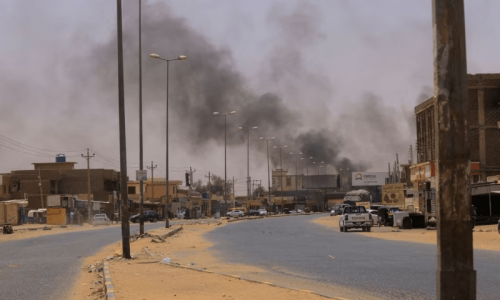
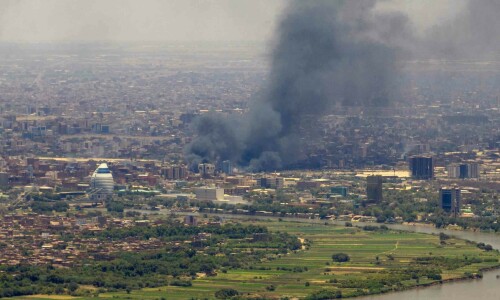
War-torn Sudan is at risk of major disease outbreaks, with thousands of unburied corpses remaining out in the open and the country’s health and sanitation infrastructure destroyed, Save the Children warned on Tuesday.
Residents say Khartoum is littered with dead bodies from fighting between the forces of army chief Abdel Fattah al-Burhan and his former deputy Mohamed Hamdan Daglo, who commands the paramilitary Rapid Support Forces.
With thousands of corpses decomposing on the streets of the capital and morgues overflowing four months into the conflict, the London-based charity raised the alarm about “the risk of major disease outbreaks in the city”.
Sudan has seen repeated cholera outbreaks in recent years, and doctors have warned of a renewed threat as a result of the war.
“A horrifying combination of rising numbers of corpses, severe water shortages, non-functioning hygiene and sanitation services, and lack of water treatment options are also prompting fears of a cholera outbreak in the city,” Save the Children said.
Without a functioning public health laboratory for testing, the non-governmental organisation said it was difficult to assess whether Sudan was experiencing a cholera outbreak.
The conflict which erupted on April 15 has prevented victims and families from reaching hospitals, 80 per cent of which the World Health Organisation says are out of service.
In addition, “prolonged power shortages have left the city’s morgues without refrigeration, leaving bodies to decompose in the heat”, said Save the Children.
“The inability to give those who have died a dignified burial is yet another element of the suffering of families in Khartoum,” said Bashir Kamal Eldin Hamid, a doctor with the organisation.
Fighting has killed at least 3,900 people nationwide, according to a conservative estimate by the Armed Conflict Location and Event Data Project. More than four million people have been uprooted from their homes, the UN’s refugee agency said Tuesday.
The United Nations says more than six million people are “just one step away from famine”, as aid groups struggle to deliver life-saving assistance through bureaucratic hurdles, security challenges and targeted attacks.
Since the conflict began, Khartoum has not gone a day without the sound of heavy artillery, air strikes or gunfire rattling terrified civilians, trapped at home and rationing water and electricity.
On Tuesday, witnesses reported clashes in central Khartoum, while a medical source in the capital’s northwest told AFP the fighting had killed 13 civilians. The source requested anonymity for their protection, as medical personnel have been targeted.
“These clashes are the heaviest since the war began,” a bus driver told AFP, adding he had been prevented from navigating the capital’s northwest.