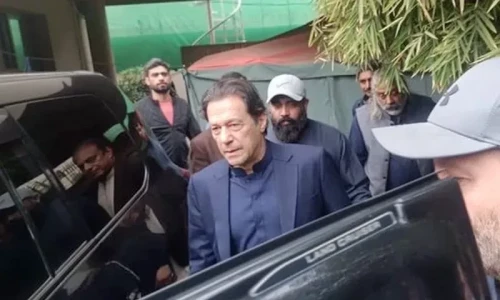
An anti-terrorism court in Lahore on Friday extended the bails of PTI Chairman Imran Khan in five cases registered in connection with violence in the country on May 9, as the prosecutor informed the court that the police have found the ex-PM “guilty” during their investigation.
In the last hearing, the court had directed the former premier to become a part of investigation and extended his bails until June 21 (today).
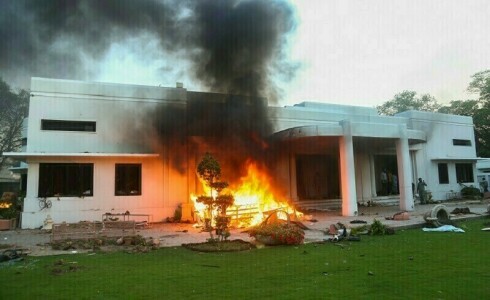
The cases in question concern the attacks on Jinnah House, Askari Tower, the Shadman Town police station, vandalism at the PML-N office in Model Town, and the setting ablaze of a container when protests erupted in the country following Imran’s arrest in the Toshakhana case.
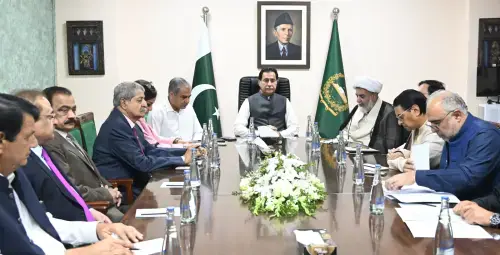
Judge Abher Gul Khan presided over today’s hearing, with both Special Prosecutor Farhad Ali Shah and Imran’s counsel Barrister Salman Safdar present before the judge.
At the outset, Shah informed the court that the police had concluded their investigation, and their findings indicated the PTI chairman’s guilt on the charges.
After the prosecutor’s statement, the court summoned lawyers from both sides to present their arguments during the next hearing, scheduled for August 8.
Later, when speaking to the media outside the court, Shah stated: “The chairman of PTI has been found guilty,” emphasising that the police had completed their probe.
“We need custody of the PTI chief,” Shah added.
Special Prosecutor Farhad Ali Shah also addressed the media, explaining, “The police conducted a thorough investigation from all aspects. We have to get access to some social media pages during the custody of the former premier.”
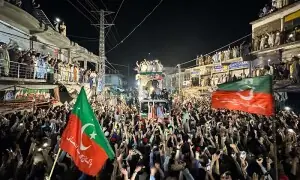
On May 9, countrywide protests erupted after the paramilitary Rangers whisked away PTI Chairman Imran Khan from the Islamabad High Court in a corruption case.
While the protests were underway, social media was flooded with footage of rioting and vandalism at various spots, including the Jinnah House and General Headquarters, the army’s head of office in Rawalpindi.
The military had termed the events of May 9 a “dark chapter” and announced around a week after the incidents its plan to try the rioters under relevant laws, including two military laws — the Pakistan Army Act and Official Secrets Act.
The decision was endorsed by the National Security Committee — the country’s principal decision-making forum on foreign policy and national security — a day later amid opposition by rights organisations and activists.