The Pakistani rupee gained Rs1.02 against the US dollar on Thursday — a day after the International Monetary Fund approved a $3 billion loan agreement for Pakistan, unlocking crucial funding for the troubled economy.
The local currency was being traded at Rs275.10 at 10am, data shared by the Exchange Companies Association of Pakistan (ECAP) showed.
According to the State Bank of Pakistan (SBP), the local currency eventually closed at Rs276.46, up 0.37 per cent, compared to yesterday.
According to Saad bin Naseer, Director of financial data and analytics firm Mettis Global, the rupee has been moving towards its “fair value” following the IMF agreement. He stated that in the current scenario, the PKR’s estimated value was approximately Rs265.
Naseer, while talking to Dawn.com, further expressed his belief that the current account was expected to achieve balance due to a decline in demand for imported goods and raw materials. Consequently, he predicted that no significant fluctuations would occur for at least the next six months.
In relation to individuals who have been hoarding dollars as an asset, Naseer suggested that there might be a sense of panic leading to the potential selling rate of around Rs285 in the unregulated grey market, where identification was not required.
Naseer emphasised the need for the government to take administrative action against those involved in such activities.
Zafar Paracha, secretary general of the ECAP, hailed the approval of the IMF loan and the injection of UAE funds into Pakistan’s reserves as a positive development for the country’s economy. He stressed the importance of using the funds wisely and practising frugality to avoid the recurrence of previous issues and the need to rely on external borrowing.
He, however, stressed that Pakistan should perceive the current situation as a critical opportunity that must be seized. He mentioned that even friendly countries, such as UAE and Saudi Arabia, made deposits purely on a commercial basis with an interest rate.
Paracha expressed his concerns and urged for vigilance rather than celebration. He expressed hope that the unfortunate cycle of the Pakistani currency experiencing a drastic decline followed by soaring to new heights does not repeat itself.
“We have grown weary of seeking funds from lenders, yet we seem to be unflagging in our spending,” Paracha remarked while quoting the prime minister’s recent statement regarding his plans to make the country self-sufficient.
He stressed the crucial necessity of implementing measures to rectify the country’s trajectory and set it on the right path.
On June 29, the IMF and Pakistan reached an agreement on a Standby Arrangement to ease the country’s financial crisis. The $3bn short-term financial package would give the economy a much-awaited respite as it teeters on the brink of default.
The IMF board approved the bailout package for the country for an amount of 2.25bn Special Drawing Rights (SDRs) — reserve funds that the institution credits to the accounts of its member nations, the IMF said in a statement. This amounts to about $3bn, or 111 per cent of Pakistan’s quota, it said.
The IMF explained that the economic reform programme it signed with Pakistan “aims to support immediate efforts to stabilise the economy and guard against shocks while creating the space for social and development spending to help the people of Pakistan”.
“The Executive Board of the International Monetary Fund approved a 9-month Stand-By Arrangement (SBA) for Pakistan for an amount of SDR2,250 million (about $3 billion, or 111 per cent of quota) to support the authorities economic stabilisation programme,” the global lender had said in a statement.
It said the arrangement comes at a challenging economic juncture for Pakistan. “A difficult external environment, devastating floods and policy missteps have led to large fiscal and external deficits, rising inflation and eroded reserve buffers in FY23.”
IMF’s approval comes after Saudi Arabia and the United Arab Emirates (UAE) deposited $2bn and $1bn, respectively, with the State Bank of Pakistan, boosting the foreign exchange reserves.
The $3bn funding, spread over nine months, is higher than expected for Pakistan. Earlier, the country was awaiting the release of the remaining $2.5bn from a $6.5bn bailout package agreed in 2019, which expired in June.
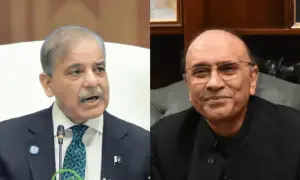
Commenting on the development, Prime Minister Shehbaz Sharif said the approval of the $3bn agreement was a “major step forward” in the government’s efforts to stabilise the economy and achieve macroeconomic stability.